Table of Contents
SEO changes constantly, and the industry makes billions by convincing website owners that they need to buy consulting, tools, and courses to keep up. But the fundamentals have not changed as much as the noise suggests. Google processes over 8.5 billion searches per day, and its core goal — returning the most useful, trustworthy result for every query — has been consistent for two decades. What has changed is Google’s ability to evaluate quality. In 2026, with AI-powered evaluation at scale, it is harder than ever to fake quality and easier than ever to succeed by genuinely providing it. This guide covers what actually moves rankings in 2026 and cuts through the noise.

Key takeaways
- Follow the main steps in SEO Basics: What Actually Matters for Ranking in 2026 in order; skipping prerequisites is the most common source of errors.
- Prioritize official packages, backups, and rollback paths when the guide touches servers, security, or production tools.
- Use the Next Read links at the end to continue with related setup, performance, or protection tasks.
What Google’s Algorithm Actually Evaluates in 2026
Google does not rank pages based on keywords stuffed into headings or exact-match anchor text. In 2026, the algorithm evaluates a constellation of signals that collectively answer one question: is this the most helpful, trustworthy result for this user’s intent?
The E-E-A-T Framework: What It Means in Practice
Google’s Quality Rater Guidelines use the E-E-A-T framework: Experience, Expertise, Authoritativeness, and Trustworthiness. This is not a direct ranking signal — Google cannot directly read your E-E-A-T — but it describes the qualities that the ranking algorithm’s many signals collectively try to measure.
Experience means first-hand knowledge. A product review written by someone who bought and used the product ranks higher than a review clearly synthesised from other reviews. Google’s Helpful Content system is specifically designed to identify and demote the latter.
Expertise relates to demonstrated knowledge depth. Does the author clearly know their subject? Is the content accurate and detailed? Does it address the question from a perspective of genuine understanding rather than surface-level coverage?
Authoritativeness is largely driven by links and mentions from other credible sources in your topic area. A cybersecurity blog cited by other security researchers and linked from respected security publications has more topical authority than one without external references.
Trustworthiness encompasses technical security (HTTPS), accurate and transparent information, clear authorship, and the absence of deceptive patterns. Trustworthiness is now the most important of the four, according to Google’s own guidance updates from 2024.
The SEO Factors That Actually Matter for Rankings
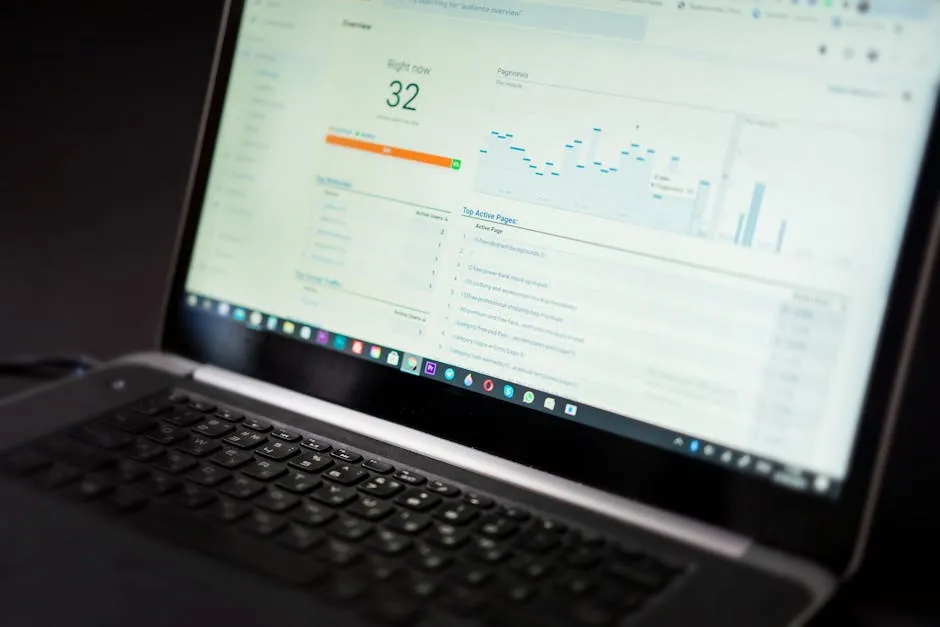
Cutting through the industry noise, here is where SEO investment actually produces ranking results in 2026:
- Content quality and depth: Google’s Helpful Content system actively demotes content written primarily for search engines rather than humans. Shallow, thin content — even if technically optimised — is being filtered out at scale. detailed, accurate, genuinely useful content is the single highest-use SEO investment.
- Search intent alignment: Does your page match what the user actually wanted when they typed their query? A blog post ranking for “how to fix leaking tap” must actually explain how to fix a leaking tap — not redirect to a plumber services contact form. Mismatched intent is the most common reason well-written content underperforms.
- Page experience signals: Core Web Vitals (LCP, CLS, INP), mobile-friendliness, HTTPS, and interstitial intrusion are all confirmed ranking factors. Sites with poor page experience signals are disadvantaged even when content quality is high.
- Backlinks from relevant, authoritative sources: Links remain one of the strongest ranking signals. A single link from a highly respected, topically relevant website is worth more than 100 links from irrelevant low-quality sites. Quality of links matters far more than quantity.
- Topical authority: Sites that publish consistently on a defined topic area build topical authority that lifts the rankings of all pages on that topic. A site focused on personal finance will rank its personal finance articles higher than a general lifestyle blog covering the same topic occasionally.
- Internal linking structure: Good internal linking helps Google understand your site’s structure, distributes link equity to important pages, and guides users to related content. Every important page should be linked from other relevant pages on your site.
For practical implementation of these SEO principles in WordPress, see the How-To section and the Deep Dive section on this site.
A Practical SEO Action Plan for 2026
Here is a prioritised list of SEO actions that produce real results in 2026:
- Audit your existing content for helpfulness: Go through your published posts and identify any that are thin, outdated, or that exist primarily to target a keyword rather than genuinely help a reader. Update the strong ones, consolidate the weak ones, and delete or noindex the ones that add no value.
- Research intent before topics: For every piece of content you plan to create, search the target keyword and study the top 10 results. What format are they? What questions do they answer? What is missing? Build content that genuinely improves on what ranks.
- Build author profiles and credentials: Add an author bio to every post. Link to the author’s credentials, social profiles, and relevant work. For YMYL (Your Money or Your Life) topics — health, finance, legal — author credentials are especially critical.
- Fix technical issues first: Use Google Search Console to identify crawl errors, mobile usability problems, and Core Web Vitals failures. These are the technical foundations. A technically broken site will not rank well regardless of content quality.
- Build links through genuine outreach: Create content that earns links naturally (original research, detailed guides, unique data). Supplement with direct outreach to relevant websites in your niche. Avoid link schemes, private blog networks, and paid links — these work short-term and produce algorithmic penalties long-term.
- Claim and optimise Google Business Profile: For any business with a local component, Google Business Profile is essential. Complete every field, add photos, collect legitimate reviews, and post updates regularly.
Google’s own Search Central documentation at developers.google.com/search/docs is the authoritative primary source for understanding how Google Search works and what it recommends.
Common Questions — SEO Basics in 2026
Does AI-generated content rank in Google?
Yes, AI-generated content can rank — but Google’s Helpful Content system evaluates quality, not origin. AI content that is accurate, detailed, provides genuine value, and demonstrates experience or expertise can rank well. AI content that is generic, thin, or clearly written to target keywords without providing real utility is precisely what the Helpful Content system is designed to demote. The question is not whether it was written by AI, but whether it is genuinely helpful.
How long does SEO take to produce results?
For a new website, meaningful organic traffic typically takes 6-12 months of consistent effort. Established sites with existing authority can see results from content improvements in 4-8 weeks. The timeline depends on topical competition, domain authority, content quality, and technical health. SEO is a compounding long-term investment — sites that have been consistently producing quality content for 3+ years have significant advantages that cannot be shortcut.
Are keywords still important for SEO in 2026?
Keywords matter, but differently than in 2015. Exact-match keyword stuffing has been actively penalised for years. What matters is topical relevance and natural language coverage of the subject area. Use your primary keyword naturally in the title, first paragraph, and a few headings. Then cover the topic clearly about the topic. Google’s NLP capabilities in 2026 understand semantic meaning and topical coverage far beyond simple keyword matching.
What are the biggest SEO mistakes to avoid in 2026?
The most damaging SEO mistakes in 2026 are: publishing thin, AI-mass-generated content at scale; buying links from irrelevant or low-quality sites; neglecting Core Web Vitals and technical site health; creating content for keywords rather than user intent; and failing to build genuine topical authority by spreading content too broadly across unrelated topics.
Conclusion: Rank by Being Genuinely Useful
The best SEO strategy in 2026 is also the simplest to describe: create content that genuinely helps people, on a site that is technically sound, and build enough credibility that other respected sources link to you. Three takeaways:
- Content quality and search intent alignment are the highest-use factors — they always have been, and Google’s ability to evaluate them has only improved.
- Technical SEO is the floor, not the ceiling — Core Web Vitals, HTTPS, mobile-friendliness, and crawlability are table stakes. Getting these wrong costs you; getting them right enables everything else.
- Topical authority compounds over time — consistently publishing quality content in a defined niche builds ranking power that individual articles cannot achieve alone.
For related technical guides and SEO implementation advice for WordPress sites, explore the How-To section. The sites that rank best in 2026 are the ones that earned it by being the best answer to the questions their audience is asking.
See also: How-To Guides: Practical Technology Tutorials for 2026 — browse all How-to articles on Hubkub.
Related Articles
- Windows Secure Boot Certificate Expiry 2026: How to Fix It
- How to Run Local AI Models on Your PC: A Step-by-Step Guide
- How to Run Local AI Models Free with Ollama: 2026 Guide
Last Updated: April 13, 2026
Practical troubleshooting checklist
Before buying new hardware or switching tools, walk through this checklist and test one change at a time. This makes it easier to identify what actually improved the result.
- Start with the basics: check lighting, placement, cable quality, browser permissions, app settings, and operating system updates.
- Change one variable: adjust one setting, test again, and note the difference.
- Compare apps: test the same device in two apps to separate hardware problems from software settings.
- Document results: keep the setting that improves quality without adding instability or privacy risk.
Related Hubkub resources: Content Quality Standards, Windows Utilities, and Corrections Policy.
FAQ
How should I use this guide?
Use it as a practical starting point, then verify details against your own device, account, software version, or official documentation.
What if the information becomes outdated?
Technology changes quickly. If you notice outdated steps or broken links, use Hubkub’s contact or corrections policy pages so the article can be reviewed.