Table of Contents
Running WordPress on a virtual private server gives you complete control over performance, security, and cost — but only if you configure it correctly from the start. Managed hosting platforms handle the complexity for you, yet charge a premium and limit your flexibility. According to W3Techs, WordPress powers over 43% of all websites on the internet, and a growing number of those sites run on self-managed VPS infrastructure. This guide covers exactly how to set up WordPress on a VPS optimized for speed and security, from initial server configuration to final launch-ready settings.

Understanding the VPS WordPress Stack
A well-architected WordPress VPS stack typically consists of four layers: the operating system (Ubuntu 24.04 LTS recommended), the web server (Nginx for performance), the database (MariaDB or MySQL), and PHP (version 8.2 or 8.3 for modern WordPress). Each layer plays a role in both performance and security.
Unlike Apache, Nginx uses an event-driven, non-blocking architecture that handles thousands of concurrent connections with minimal memory. For WordPress, this translates to faster time-to-first-byte (TTFB) and better behavior under traffic spikes. Pair Nginx with PHP-FPM (FastCGI Process Manager) and you have a modern, production-grade server stack.
Choosing the Right VPS Provider and Plan
For a WordPress site expecting moderate traffic (under 50,000 monthly visitors), a 2 vCPU / 2GB RAM VPS is a solid starting point. Providers like DigitalOcean, Vultr, Hetzner, and Linode all offer competitive pricing around $12-20/month for this spec. Hetzner in particular offers exceptional value in Europe and US regions. Choose a datacenter geographically closest to your primary audience to minimize network latency.
Why a Self-Managed VPS Outperforms Shared Hosting

The performance and security advantages of a properly configured VPS over shared hosting are significant:
- Dedicated resources: No resource contention with neighboring sites. Your CPU and RAM are guaranteed.
- Custom PHP configuration: Tune
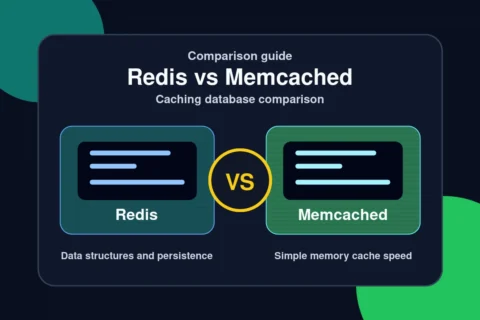
memory_limit,upload_max_filesize, and OPcache settings specifically for WordPress. - Redis object caching: Implement in-memory caching that shared hosts rarely allow, reducing database queries by 60–80%.
- Full firewall control: Configure UFW or iptables rules to block unwanted traffic at the server level.
- SSL/TLS management: Use Let’s Encrypt with auto-renewal, or configure Cloudflare’s edge certificates.
- No bad-neighbor risk: Shared hosting means a compromised neighboring site can affect your server’s IP reputation.
For a deeper look at performance optimization techniques, see our Deep Dive articles on WordPress architecture.
Step-by-Step: How to Set Up WordPress on a VPS
Step 1 — Provision and secure your VPS
After creating your VPS, immediately disable root SSH login, create a sudo user, and set up SSH key authentication. Then apply all security patches:
sudo apt update && sudo apt upgrade -yStep 2 — Configure UFW firewall
Allow only ports 22 (SSH), 80 (HTTP), and 443 (HTTPS):
sudo ufw allow OpenSSH && sudo ufw allow 'Nginx Full' && sudo ufw enableStep 3 — Install Nginx, PHP-FPM, and MariaDB
Install the full core stack in one command:
sudo apt install nginx php8.2-fpm php8.2-mysql php8.2-xml php8.2-mbstring php8.2-curl php8.2-zip mariadb-server -yStep 4 — Secure MariaDB
Run the security script to set a root password, remove anonymous users, disable remote root login, and drop the test database:
sudo mysql_secure_installationStep 5 — Create the WordPress database
Log into MariaDB and run the following SQL commands:
CREATE DATABASE wordpress;
CREATE USER 'wpuser'@'localhost' IDENTIFIED BY 'StrongPassword!';
GRANT ALL ON wordpress.* TO 'wpuser'@'localhost';
FLUSH PRIVILEGES;
Step 6 — Download and configure WordPress via WP-CLI
wp core download --path=/var/www/yourdomain.comwp config create --dbname=wordpress --dbuser=wpuser --dbpass=StrongPassword!Step 7 — Configure Nginx server block
Create a server block at /etc/nginx/sites-available/yourdomain.com with the standard WordPress Nginx configuration, including FastCGI caching rules and security headers.
Step 8 — Install SSL with Certbot
sudo apt install certbot python3-certbot-nginx -ysudo certbot --nginx -d yourdomain.com -d www.yourdomain.comStep 9 — Run the WordPress installer
Visit the URL below to complete the 5-minute setup wizard, setting your site title, admin username, and password:
https://yourdomain.com/wp-admin/install.phpStep 10 — Install performance essentials
Add a caching plugin (LiteSpeed Cache or WP Super Cache), configure OPcache in your PHP ini, and set up Redis object cache if your plan allows it.
For the authoritative reference on WordPress server requirements, consult the official WordPress hosting requirements page.
Common Questions — How to Set Up WordPress on a VPS
Do I need a control panel like cPanel or Plesk for WordPress on a VPS?
No. While control panels simplify management for non-technical users, they add overhead, cost, and attack surface. For a WordPress-focused VPS, the command-line stack (Nginx + PHP-FPM + MariaDB + WP-CLI) gives you more performance per dollar. Tools like AAPanel or ServerPilot offer a middle ground if you prefer a GUI.
What is the minimum VPS spec for WordPress?
A 1 vCPU / 1GB RAM VPS can run WordPress adequately for low-traffic sites (under 5,000 monthly visitors) with aggressive caching. For sites with regular traffic, aim for 2 vCPU / 2GB RAM minimum. Enabling Redis object caching dramatically reduces RAM requirements by offloading database query results to memory.
Should I use Apache or Nginx for WordPress on a VPS?
Nginx is the recommended choice for WordPress on a VPS in 2025. It consumes less memory, handles concurrent connections more efficiently, and is easier to configure for PHP-FPM. Apache’s main advantage — .htaccess per-directory config — is actually a performance liability on high-traffic sites. WordPress works excellently with Nginx and WP-CLI.
How do I move an existing WordPress site to a VPS?
The cleanest method is using the Duplicator or All-in-One WP Migration plugin to create a full backup, then restoring it on the new VPS. Alternatively, use WP-CLI for a reliable manual migration path:
wp db export backup.sqlwp db import backup.sqlConclusion
Setting up WordPress on a VPS is one of the best investments you can make in your site’s long-term performance and security. Here are three key takeaways:
- Use Nginx with PHP-FPM — not Apache — for the best performance-per-resource ratio on a VPS.
- Secure your server from day one: SSH key auth, UFW firewall, MariaDB hardening, and SSL before your site goes live.
- WP-CLI is your best friend on a VPS — it makes WordPress installation, updates, and maintenance orders of magnitude faster than the browser admin panel.
Your next step after setup is performance tuning. Read our guide on improving WordPress performance with Redis to take your VPS site to the next level.
See also: How-To Guides: Practical Technology Tutorials for 2026 — browse all How-to articles on Hubkub.
Related Articles
- How to Improve WordPress Performance with Redis Object Cache
- How to Set Up Cloudflare for WordPress the Right Way
- How to Create a Fast Tech Blog with WordPress and Redis
Last Updated: April 13, 2026
Editorial and update note
Hubkub articles are maintained with a practical quality checklist: clear purpose, useful context, safe recommendations, internal links to related guides, and correction pathways for outdated details. If you notice an error or stale information, please use our Contact or Corrections Policy pages so we can review it.
Learn more about our standards in Editorial Policy, Content Quality Standards, and Corrections Policy.
Related Hubkub resources
Practical troubleshooting checklist
Before buying new hardware or switching tools, walk through this checklist and test one change at a time. This makes it easier to identify what actually improved the result.
- Start with the basics: check lighting, placement, cable quality, browser permissions, app settings, and operating system updates.
- Change one variable: adjust one setting, test again, and note the difference.
- Compare apps: test the same device in two apps to separate hardware problems from software settings.
- Document results: keep the setting that improves quality without adding instability or privacy risk.
Related Hubkub resources: Content Quality Standards, Windows Utilities, and Corrections Policy.
FAQ
How should I use this guide?
Use it as a practical starting point, then verify details against your own device, account, software version, or official documentation.
What if the information becomes outdated?
Technology changes quickly. If you notice outdated steps or broken links, use Hubkub’s contact or corrections policy pages so the article can be reviewed.