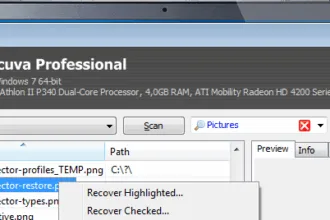
PhotoRec is still a credible download in 2026 when the real use case matches what the official source promises. This review is based only on official sources checked on April 20, 2026. I used Thaiware only for product discovery provenance, then verified the official homepage, official download path, official docs or help surface, and official release or context source before treating this page as writing-ready.
Last updated: April 20, 2026
- Rechecked the official homepage, download path, and source-of-truth support links for this product.
- Confirmed the featured image source, downloads category fit, and safe-download path for this canonical review.
Key takeaways
- PhotoRec remains one of the strongest trust-first recovery tools because the official site still frames it as free, open-source, and read-only when scanning damaged media.
- Official proof checked: latest stable version 7.2, release date February 22, 2024, and the live CGSecurity documentation plus FAQ path.
- The biggest downside is usability: it is powerful, but not beginner-friendly, and the interface still feels technical compared with commercial recovery tools.
Official download path for PhotoRec Review
Hubkub does not host installers. Use the official vendor/project page first, then use this review to check fit, limits, and safer setup notes.
Hubkub verification notes for PhotoRec Review
- Official download/support links already cited on this page were checked as the preferred source path for PhotoRec Review.
- Hubkub does not host installer files; the download action points readers back to the official vendor or project source.
- This page separates practical fit, trade-offs, and safety notes so readers can decide whether PhotoRec Review matches their workflow.
What I verified for this review
- Review basis: official source checks
- Thaiware discovery URL: https://software.thaiware.com/download/PhotoRec
- Official homepage: https://www.cgsecurity.org/wiki/PhotoRec
- Official download URL: https://www.cgsecurity.org/wiki/TestDisk_Download
- Official docs/help checked: https://www.cgsecurity.org/testdisk_doc/
- Official release source checked: https://www.cgsecurity.org/wiki/TestDisk_Download
- Latest stable version checked: 7.2
- Release date shown on the official page: February 22, 2024
- Current official installer artifact seen: testdisk-7.2.win.zip on the official CGSecurity download page
- Concrete proof marker: Official page labels PhotoRec as free open-source recovery software and the download page exposes the latest stable version 7.2
- Official OS support checked: DOS/Windows, Linux, FreeBSD, NetBSD, OpenBSD, Sun Solaris, and macOS per official CGSecurity documentation
Official resources
Why PhotoRec still matters in 2026
PhotoRec still matters because trustworthy recovery tools are rare. When storage failure or accidental deletion happens, readers care more about honesty, download safety, and file-system independence than about polished marketing. PhotoRec keeps winning on the trust axis because the official source still explains what the tool is, what it does, and why it uses read-only access.
For this review I used Thaiware only for discovery provenance, then verified the official PhotoRec page, the official TestDisk and PhotoRec download page, the official documentation path, and the official FAQ. That is a stronger truth layer than any software mirror can provide for a recovery utility.
The official pages make the product scope clear: PhotoRec is a companion tool to TestDisk, it is free and open source, and it is designed to recover files from damaged or reformatted media by ignoring the file system and scanning underlying data. That message is consistent across the current public source layer.
Best for and core workflow
PhotoRec is best for people who prioritize recovery credibility over convenience. If you need a tool that can work against damaged media, memory cards, and file-system problems without trying to sell you a license halfway through the process, PhotoRec remains one of the clearest trust-first options.
It is a poor fit for beginners who want a glossy wizard and a reassuring commercial UI. The core workflow is technical, the interface is plain, and the learning curve is part of the real decision. That does not make it weak; it just means the product is honest about its audience.
Pricing or license reality
PhotoRec is free and open source under GPL terms. There is no freemium limit, no recovery-capacity cap, and no paid tier hiding behind the official site. That makes it different from many consumer recovery tools that advertise free scanning but charge for actual restoration.
That licensing reality is part of the appeal. The tradeoff is that you are choosing power and transparency over commercial hand-holding.
What I learned from the official proof layer
The official PhotoRec page and official download page provide unusually strong trust markers for a recovery tool. CGSecurity still labels the latest stable version as 7.2 and ties it to a public date, while the page explains the read-only recovery model and the supported operating systems. That is more credible than a glossy landing page with no technical substance.
The docs and FAQ are also live. the practical effect is recovery tools can become dangerous when the support layer is stale or hidden. Here, the documentation is part of the product’s trust story, not an afterthought.
Comparison table
| Tool | Best for | Why you might choose it | Main caveat |
|---|---|---|---|
| PhotoRec | Best for trust-first open-source file recovery | Free, open-source, read-only workflow, broad platform coverage | Interface is technical and not beginner-friendly |
| TestDisk | Best for partition recovery and deeper disk repair context | Excellent companion tool from the same official source | Different primary use case than file carving |
| EaseUS Data Recovery Wizard | Best for commercial wizard-style recovery | Friendlier interface for beginners | Free tier limits and stronger upsell pressure |
| MiniTool Partition Wizard | Best for partition management with some recovery messaging | More visual Windows workflow | Not as purely recovery-focused or open-source as PhotoRec |
Safe official download notes for PhotoRec Review
Use the official CGSecurity PhotoRec page and the official TestDisk download page. For recovery software, avoiding random mirrors matters more than usual because a compromised download can target exactly the kind of stressed user who is trying to recover important files quickly.
For this update I verified the product page, official download page, official docs, and official FAQ. I did not run a live recovery scenario for this page update, so this remains a review based on official sources rather than a hands-on recovery benchmark.
PhotoRec Review pros and cons: fit notes
Pros
- Free and open-source with no recovery paywall
- Strong official docs and FAQ trust path
- Broad OS support and read-only recovery model
- Still one of the most credible recovery downloads on the web
Cons
- Interface is not beginner-friendly
- Less polished than commercial wizard-driven tools
- Best results still depend on user discipline during recovery
Alternatives worth checking
If you need partition-focused recovery depth, TestDisk is the closest sibling. If you want a friendlier Windows partition interface, MiniTool Partition Wizard may feel easier. If you are deciding between open-source and paid convenience, compare this page with Clonezilla and other recovery-oriented tools carefully.
Who should download PhotoRec Review?
PhotoRec is still one of the safest recovery downloads to recommend in 2026 when the reader values open-source transparency, live documentation, and a credible official trust path more than visual polish.
If you can tolerate the technical interface, it remains a standout. If you need a hand-holding recovery wizard, you may want a commercial alternative instead.
PhotoRec Review download and safety questions
Is PhotoRec really free?
Yes. PhotoRec is genuinely free and open-source under GPL terms. The official site does not hide a paid recovery step behind the download, which is one reason the tool still stands out in a crowded and often misleading recovery-software market.
Is PhotoRec safe to download?
Yes, when you use the official CGSecurity product and download pages. For this review I verified the homepage, official download page, official documentation, and FAQ path instead of relying on third-party mirrors for version or support information.
What version did you verify?
I verified PhotoRec 7.2 with the official CGSecurity pages showing the latest stable version and a public release date of February 22, 2024. That gives this review a concrete proof layer instead of generic reassurance text.
Does PhotoRec work only on Windows?
No. CGSecurity documents support across Windows, Linux, several BSD variants, Solaris, and macOS. That wide platform story is one of the reasons PhotoRec remains relevant even though the interface looks old-fashioned.
Should I choose PhotoRec or a commercial recovery app?
Choose PhotoRec if trust, transparency, and open-source recovery depth matter most. Choose a commercial app if you need a friendlier wizard and are comfortable with paid-tier or recovery-cap limits.
Reader-first software checklist
Before installing or switching to this software, use this quick checklist to confirm whether it fits your needs and risk tolerance.
- Official source: prefer the developer website, official documentation, or a clearly trusted distribution channel.
- Platform fit: check whether your Windows, macOS, Linux, Android, or iOS version is supported.
- License and cost: confirm whether the app is free, open source, freemium, trial-based, or paid.
- Privacy and permissions: review what files, folders, network access, account data, or browser permissions the app may use.
- Backup first: for recovery, storage, networking, privacy, or system utilities, back up important data before changing settings.
Safe download and setup notes
Hubkub does not recommend clicking misleading download buttons or installing unknown bundles. When possible, use the official source and avoid third-party installers that add toolbars, browser changes, or unrelated offers. After downloading, verify the file name, publisher, version, and installer prompts before continuing.
Pros, limits, and alternatives to consider
- Best fit: readers who need the core function described in this guide and prefer a practical setup path.
- Watch out for: outdated versions, unsupported platforms, unclear installers, or features that require paid upgrades.
- Compare alternatives: if this app feels too complex, too limited, or not maintained enough for your workflow, compare it with similar tools before installing.
Related Hubkub resources: Safe Software Downloads, Software Reviews, How We Review Software, and Content Quality Standards.
FAQ
Should I download this software from any mirror site?
Use the official developer website or a trusted distribution channel whenever possible. Mirror sites can be useful in limited cases, but they may also include outdated installers, misleading ads, or unwanted bundles.
What should I check before installing?
Check the publisher, version, license, supported operating system, installer prompts, and whether the app requests sensitive permissions.