Key Takeaways
- Meta is expanding AI age assurance across Facebook and Instagram to detect likely under-13 users and place suspected teens into stricter Teen Account protections.
- The system can review text, interactions, and visual cues such as height or bone structure, but Meta says this is age estimation, not facial recognition.
- Parents should treat this as a safety signal, not a full solution: review teen settings, reporting options, privacy controls, and what children post publicly.
Meta AI age assurance is no longer just a quiet moderation feature. Meta says it is strengthening underage enforcement on Facebook and Instagram with AI that can detect likely under-13 users and automatically move suspected teenagers into age-appropriate experiences. The official Meta announcement says the system can use text, interactions, and visual cues in photos or videos, including examples such as height or bone structure, to estimate a person’s general age.
That makes the story bigger than a one-day social-media update. For parents, guardians, schools, and privacy-conscious users, the useful question is not “is Meta using AI?” It is what changes now, who is affected, and what should families check tonight. This explainer turns the announcement into a practical safety checklist instead of a thin recap.
What did Meta announce about AI age assurance?
Meta’s official post says it is continuing to strengthen measures that remove people under 13 from its services and put teens into safer experiences. The company says it already uses age assurance signals, and the latest update adds a deeper use of AI visual analysis alongside existing text and interaction signals.
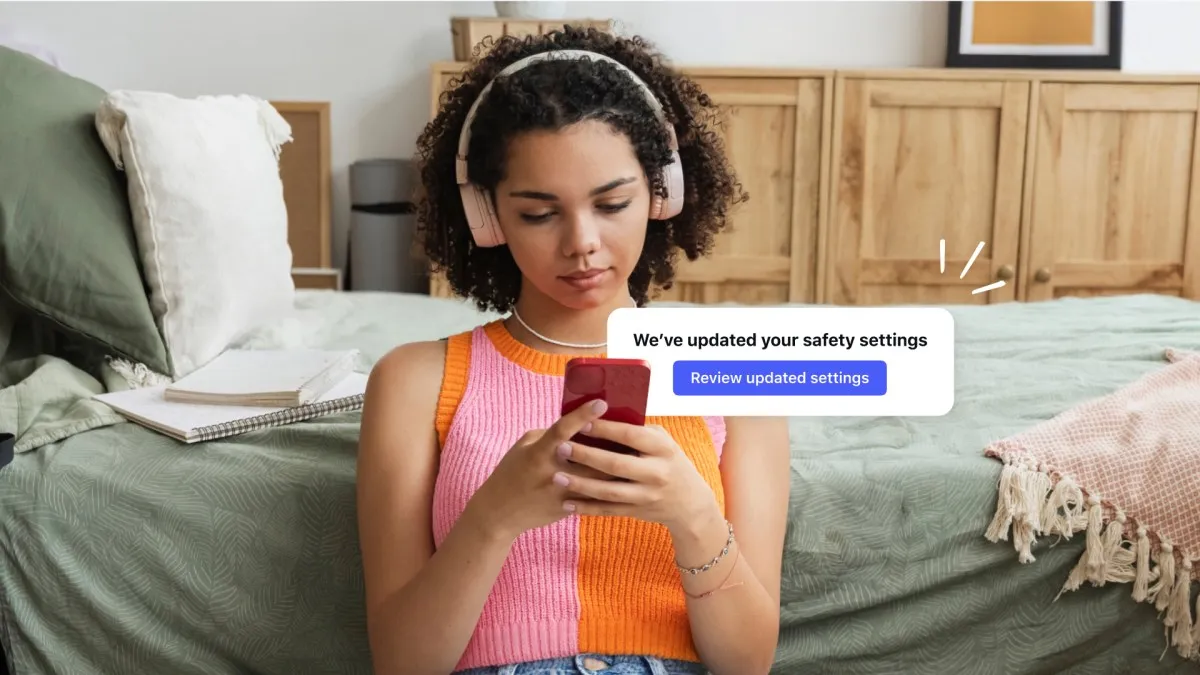
The clearest change is scope. Meta says it is expanding technology that automatically places people it believes may be teens into Teen Account protections on Instagram in the EU and Brazil, and on Facebook in the US. Teen Accounts are designed to apply stricter defaults, such as content controls and limits around who can contact younger users.
Meta also says it is simplifying the underage-account reporting flow. Platform detection is never perfect, so a safer setup combines automated age assurance with easier human reporting, parent conversations, and regular account checks.
| Area | What Meta says is changing | What families should do |
|---|---|---|
| Under-13 detection | AI helps identify likely underage accounts for removal | Report accounts that appear clearly under the allowed age |
| Teen protections | Suspected teens can be placed into Teen Account protections | Check whether the teen account settings are actually enabled |
| Visual signals | AI may look at general visual cues such as height or bone structure | Reduce public posting of identifying photos and profile details |
| Age changes | Some users changing birthdays may need ID or Yoti age estimation | Talk to teens before they try to bypass age settings |
Does this mean Meta is using facial recognition?
Meta says no. In the official wording, the company says the visual analysis is not facial recognition because it is not identifying a specific person. Instead, Meta says the AI looks at general themes and visual clues to estimate general age. Examples in the announcement include height and bone structure.
That distinction is important, but it does not remove the privacy concern. For normal users, the practical issue is that photos and videos may carry age-related signals even when the caption does not. A child may not write their age in a bio, but public posts, school uniforms, birthday photos, friend networks, and interaction patterns can still create a strong age signal.
The safest response is not panic. It is better account hygiene. Families should check who can see profile photos, Reels, tagged posts, and story content. If a young person is using Facebook or Instagram, reduce unnecessary public exposure and make sure private accounts, follower review, and message limits are set deliberately.
Who is affected by the new Teen Account expansion?
The direct group is young users on Facebook and Instagram, especially accounts that may be under 13 or teens who may have misstated their age. Meta says the update expands suspected-teen protections on Instagram in the EU and Brazil and on Facebook in the US. If the rollout reaches more countries later, the same checklist will still apply.
Parents and guardians are affected too because automated safeguards can create two different problems. First, an account may be correctly moved into a stricter teen experience, but the family may not understand what changed. Second, an account may be wrongly flagged, or a teen may attempt to change their birthday to avoid restrictions. Meta says some birthday changes from under 18 to over 18 can require verification through ID or Yoti’s facial age estimation tools.
For schools, creators, and community admins, the lesson is also clear: avoid encouraging minors to share age, school, location, schedule, or full-face media publicly. The safer default is to keep youth communities private, moderated, and light on identity details.
What should parents check now?
Use this as a 15-minute safety pass rather than a one-time news story. The first step is to confirm whether the child or teen actually uses Facebook, Instagram, Messenger, Threads, WhatsApp, or Meta AI features. The privacy surface is not only the main profile; AI chats, comments, public posts, and tagged photos all matter.
- Check age and birthday accuracy. Do not let a child use an adult birth year just to unlock features.
- Confirm Teen Account protections. Review who can message the account, what content controls are active, and whether livestream or tagging limits apply.
- Review public photos and videos. Remove unnecessary public posts that reveal age, school, routine, or location.
- Use reporting when needed. If an underage account is visible, use Meta’s simplified reporting flow instead of assuming the system will catch it.
- Talk about AI age checks honestly. Explain that platforms may infer age from behavior and media, not only from a birthday field.
This checklist fits with Hubkub’s broader privacy guidance. If your family already reviews AI privacy settings, this is the social-media version of the same habit: do not rely on one toggle, and do not feed platforms more personal data than necessary.
How does this connect to AI privacy and safety?
Meta’s announcement shows how AI safety has two sides. On one side, age assurance can protect minors from adult experiences, unknown contacts, and content that is not age-appropriate. On the other side, the same safety system depends on inference from personal data, media, and behavior. That is why parents should separate protective use of AI from unlimited trust in the platform.
The practical rule is simple: if an AI system is powerful enough to infer age from patterns, then users should assume public posts are more revealing than they look. Keep children’s profiles private, limit public media, and avoid posting information that combines face, age, school, city, and routine in one place.
For adults managing family devices, also review the basics: use strong passwords, enable two-factor authentication, and keep account recovery information current. If you need a broader security baseline, start with Hubkub’s Security complete guide and then apply the same discipline to each social account.
What is the best response for schools and community admins?
Schools, clubs, and community admins should not treat this as only a parent issue. If a page or group includes minors, the admin team should review posting rules, tagging habits, and moderation queues. Avoid public posts that combine student names, faces, uniforms, locations, and dates unless there is a clear consent process.
Admins should also prepare a basic escalation path: who removes a risky post, who contacts a parent, and who reports a likely underage or impersonation account. The faster the process, the less damage a public post can do.
For technical teams building youth-facing apps, the wider lesson is that age assurance is moving toward platform-level data sharing and AI inference. Product teams should follow privacy-by-design principles: collect less, keep defaults strict, and make parent reporting easy. Hubkub’s AI guide is a good next stop for understanding how these AI systems fit into broader product and policy decisions.
FAQ
Q: Is Meta scanning every private message to guess age?
A: Meta’s announcement focuses on age assurance signals across its services, including text, interactions, and visual cues. It does not say parents should assume private messages are the main signal. The safer practical rule is to limit public exposure and review account settings rather than guessing which single signal matters most.
Q: Is bone-structure analysis the same as facial recognition?
A: Meta says its AI visual analysis is not facial recognition because it estimates general age instead of identifying a specific person. Privacy-conscious users should still treat public photos and videos as sensitive because they can reveal age, location, routines, and social connections.
Q: Can a teen appeal if Meta gets their age wrong?
A: Meta says some age changes, such as changing a birthday from under 18 to over 18, may require verification with an ID or Yoti facial age estimation. If an account is wrongly restricted, families should use the official account and age-verification flows rather than creating a second account.
Q: What is the most important parent action tonight?
A: Check whether the teen account settings are active, make the account private where possible, review public photos, and remove posts that reveal school, location, or routine. Then talk with the teen about why misstating age can reduce their safety protections.
Bottom line: Meta’s AI age assurance update may improve teen protections, but it also proves how much platforms can infer from ordinary content. Treat it as a prompt to review family privacy settings now, not as a reason to outsource safety entirely to Meta.
Sources: Meta official announcement on AI age assurance; The Verge report on Meta’s rollout.
Security editorial note
This checklist is written for practical risk reduction. Hubkub aims to separate confirmed facts from recommended defensive actions, link readers to related guidance where useful, and update security content when important details change. Always verify urgent incidents against your vendor, administrator dashboard, or official security advisory before making production changes.
Learn more about our standards in Editorial Policy, Content Quality Standards, and Corrections Policy.
Related Hubkub resources
Practical security action checklist
Use this section as a practical follow-up checklist. Security articles can become outdated quickly, so verify urgent details against your vendor dashboard, official advisory, or administrator logs before making production changes.
- Confirm scope: identify which accounts, devices, repositories, integrations, or services may be affected.
- Rotate sensitive access: review tokens, passwords, API keys, SSH keys, OAuth apps, and browser sessions when the risk involves account or infrastructure access.
- Check logs: look for unusual sign-ins, permission changes, deployment events, package changes, or data exports.
- Patch and document: apply vendor guidance, record what changed, and schedule a follow-up review.
Related Hubkub resources: Security Checklists, Content Quality Standards, and Corrections Policy.