Clonezilla is still a strong 2026 download when your real job is imaging or cloning an entire system, not syncing everyday files inside Windows. The official project continues to expose a clear stable track, release notes, changelog, and checksum files, which gives this tool a stronger trust path than many rescue utilities with weaker documentation. This is a review based on official sources updated on April 20, 2026, and it is based on official sources plus Thaiware only for discovery provenance.
Last updated: April 20, 2026
- Rechecked the official homepage, official download path, docs/help source, and release trail for the current public version story.
- Confirmed the featured image source, category fit, and safe-download wording for this canonical review.
Key takeaways
- Clonezilla is best for full-system imaging, migration, and restore media workflows rather than day-to-day file backup convenience.
- The official stable download page still exposed stable 3.3.1-35 along with release notes, changelog, checksum, and GPG checksum links.
- Safe download path: use the official Clonezilla downloads page and prefer the stable line unless you specifically need the testing or alternative branch.
Official download path for Clonezilla Review
Hubkub does not host installers. Use the official vendor/project page first, then use this review to check fit, limits, and safer setup notes.
Hubkub verification notes for Clonezilla Review
- Official download/support links already cited on this page were checked as the preferred source path for Clonezilla Review.
- Hubkub does not host installer files; the download action points readers back to the official vendor or project source.
- This page separates practical fit, trade-offs, and safety notes so readers can decide whether Clonezilla Review matches their workflow.
What I verified for this review
- Review basis: official source checks
- Verified on: April 20, 2026
- Latest stable version checked: 3.3.1-35
- Beta version: Testing line 3.3.2-22 and Ubuntu-based alternative track were also visible on the official download page
- Release date shown on the official page: Based on Debian Sid as of Feb 20, 2026 on the official stable release notes
- Official download URL: https://clonezilla.org/downloads.php
- Official homepage: https://clonezilla.org/
- Official docs/help URL: https://clonezilla.org/clonezilla-live-doc.php
- Official release notes / changelog URL: https://clonezilla.org/downloads/stable/release-notes.php
- Current official installer artifact seen: Clonezilla live stable track 3.3.1-35 with official CHECKSUMS.TXT and CHECKSUMS.TXT.gpg links
- Official OS support checked: Bootable live environment for x86-64 PCs; official project also exposes alternative and testing tracks
- File size shown on official page: not summarized in one clean number on the checked official page
- Signature check: Official stable download page exposed both CHECKSUMS.TXT and CHECKSUMS.TXT.gpg links.
- VirusTotal check: run your own malware scan before installing
- Hash/checksum: Official stable page exposed CHECKSUMS.TXT.
- Pricing or license reality: Free and open-source according to the official project site.
Who should use it, and who should skip it?
Clonezilla is not a universal recommendation. It is a good download only when its strengths match your real job. That sounds obvious, but it is how weak software reviews drift into vague “good for everyone” copy. For a canonical downloads page, the honest question is whether the official product scope matches the buyer intent behind the search.
Who should use it
- Power users preparing a full system migration to a new drive or SSD.
- Admins who want bootable imaging media with official checksum links.
- Readers who prefer a free open-source imaging tool over a subscription backup suite.
Who should skip it
- People who want seamless in-Windows scheduling and beginner-friendly restore buttons.
- Anyone who only needs cloud sync or a lightweight file-history style tool.
- Users who are uncomfortable booting from external media or reading technical release notes.
Supported platforms, version proof, and safe-download reality
The core trust layer for this review came from the official homepage, the official download surface, and the official docs or release trail. Thaiware was used only as the discovery layer to confirm the product entity before official-source verification.
For this update, the most useful proof markers were the official version line 3.3.1-35, the release trail marker Based on Debian Sid as of Feb 20, 2026 on the official stable release notes, and the package or build evidence Clonezilla live stable track 3.3.1-35 with official CHECKSUMS.TXT and CHECKSUMS.TXT.gpg links. That combination is materially better than a soft review that merely says “latest version available” without pointing at anything concrete.
There are also limits worth saying plainly. I did not run a fresh hands-on install for this update, and I did not perform a fresh malware scan or code-signature audit. This page is therefore a review based on official sources, a review based on official source checks. That honesty matters more than pretending the proof layer is stronger than it really is.
If you are comparing this with adjacent Hubkub downloads, also see VeraCrypt, Rufus, and balenaEtcher or Ventoy-adjacent recovery tooling for neighboring workflows. Those are not the same product type, but they help define where Clonezilla fits in a safer download decision.
What this product actually makes easier
The real value of Clonezilla is not “it has lots of features.” The value is that it reduces friction in a specific workflow. For readers trying to decide whether to download it, that workflow fit is more important than marketing vocabulary.
Clonezilla makes sense when you want to move, duplicate, or restore an entire system image with less ambiguity than piecemeal file backup. It is especially relevant before hardware upgrades, SSD migrations, or rescue-media prep, because the workflow is built around imaging and restore logic rather than around casual file browsing.
The important distinction is that Clonezilla is not trying to be an always-open consumer desktop app. It is a tool for imaging tasks. If that is your job, the official checksum and release-note path is a real strength. If your real job is simply syncing files or creating a bootable installer, a different category of tool will feel easier.
How it compares with direct substitutes
No canonical review should pretend a product exists in a vacuum. The better question is what you give up or gain if you choose something else.
| Tool | Best fit | Main trade-off |
|---|---|---|
| Clonezilla | Best for full-drive imaging and offline cloning from bootable media | Less friendly than consumer Windows backup apps |
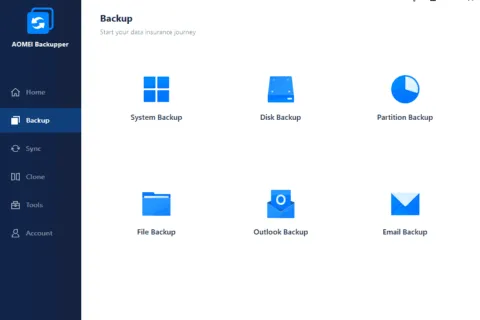
| AOMEI Backupper Standard | Better for scheduled Windows backups inside the desktop OS | Free edition is more convenience-focused than rescue-media-centric |
| Macrium Reflect | Better for commercial polish and guided restore workflows | Paid/trial positioning is less straightforward than Clonezilla’s fully free model |
| Rescuezilla | Better for users who want a friendlier imaging UI on top of a rescue workflow | Project breadth and proof markers differ from Clonezilla’s long-running official ecosystem |
This comparison also helps stop intent drift. A downloads page should answer “should I download this product?” not collapse into an unfocused alternatives article. If another tool clearly fits your use case better, that is part of the review, not a weakness in it.
Clonezilla Review pros and cons: fit notes
Pros
- Official stable page includes checksum and GPG checksum links.
- Free and open-source with a long-running project identity.
- Strong fit for migration, cloning, and bare-metal style backup jobs.
- Release notes and changelog are easier to verify than on many rescue tools.
Cons
- Not a normal desktop app; it is a bootable workflow.
- The interface and terminology can feel intimidating for casual users.
- Not the best fit for simple file sync or cloud backup needs.
- The official page exposes several tracks, so beginners need to avoid grabbing the wrong build line.
Safe official download notes for Clonezilla Review
The safest way to download Clonezilla is still the boring way: use the official vendor or project domain, verify the current version and package name on that official page, and avoid third-party mirror wording when the official source already exposes a working route. That matters even more for backup, cloning, and recovery software because the failure cost is usually higher than with casual utility apps.
On this update, the safest proof markers were the official URLs listed above plus the concrete version or artifact details surfaced by the vendor. When a page exposes checksums or checksum-plus-GPG links, that is even better. When it does not, the next safest move is to stay tightly on the official domain and avoid mystery repacks.
Who should download Clonezilla Review?
Clonezilla remains one of the best no-nonsense downloads for serious disk imaging if you can tolerate a more technical workflow. The official project still provides a stable branch, release notes, and checksum files, which is exactly the proof layer I want to see before recommending a rescue-style tool.
Clonezilla Review download and safety questions
Is Clonezilla safe to download in 2026?
Yes, if you stay on the official Clonezilla download page and use the stable track. For this update I verified the official homepage, the main downloads page, the stable release notes, and the official live-doc path. The presence of checksum and GPG checksum links is a meaningful trust signal.
Is Clonezilla really free?
Yes. The official project presents Clonezilla as free and open-source software, not as a time-limited trial or a freemium desktop utility.
Is Clonezilla a normal Windows backup app?
Not really. Clonezilla is stronger as bootable imaging media for cloning or restoring entire systems. If you want scheduled backups inside Windows with a more familiar desktop workflow, something like AOMEI Backupper Standard is usually the easier fit.
Should I use the stable or testing build?
Most readers should stay with the stable line. The official downloads page exposed both stable and testing tracks, but the stable path is the safer choice for a canonical download recommendation unless you already know why you need the newer testing branch.
When should I choose Clonezilla over balenaEtcher or Rufus?
Choose Clonezilla when you need imaging or cloning itself. Choose balenaEtcher or Rufus when your main job is writing bootable media. Those tools help you create installation or rescue drives, but they are not substitutes for full disk imaging and restore workflows.
Reader-first software checklist
Before installing or switching to this software, use this quick checklist to confirm whether it fits your needs and risk tolerance.
- Official source: prefer the developer website, official documentation, or a clearly trusted distribution channel.
- Platform fit: check whether your Windows, macOS, Linux, Android, or iOS version is supported.
- License and cost: confirm whether the app is free, open source, freemium, trial-based, or paid.
- Privacy and permissions: review what files, folders, network access, account data, or browser permissions the app may use.
- Backup first: for recovery, storage, networking, privacy, or system utilities, back up important data before changing settings.
Safe download and setup notes
Hubkub does not recommend clicking misleading download buttons or installing unknown bundles. When possible, use the official source and avoid third-party installers that add toolbars, browser changes, or unrelated offers. After downloading, verify the file name, publisher, version, and installer prompts before continuing.
Pros, limits, and alternatives to consider
- Best fit: readers who need the core function described in this guide and prefer a practical setup path.
- Watch out for: outdated versions, unsupported platforms, unclear installers, or features that require paid upgrades.
- Compare alternatives: if this app feels too complex, too limited, or not maintained enough for your workflow, compare it with similar tools before installing.
Related Hubkub resources: Safe Software Downloads, Software Reviews, How We Review Software, and Content Quality Standards.
FAQ
Should I download this software from any mirror site?
Use the official developer website or a trusted distribution channel whenever possible. Mirror sites can be useful in limited cases, but they may also include outdated installers, misleading ads, or unwanted bundles.
What should I check before installing?
Check the publisher, version, license, supported operating system, installer prompts, and whether the app requests sensitive permissions.