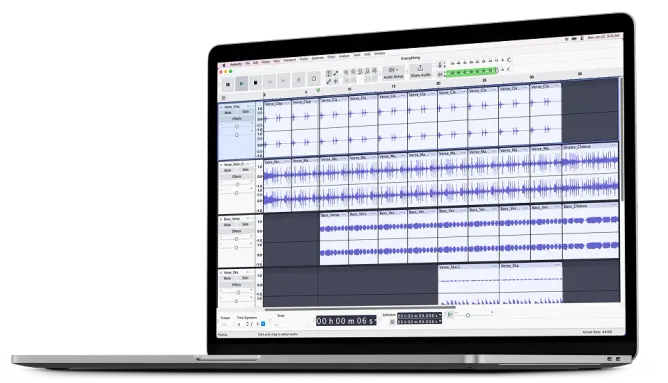
Audacity is worth considering in 2026 if your priority is real recording and cleanup value without a subscription. This is an official-source review built from the product’s official homepage, official download page, official docs/help surface, and official release or changelog path checked on April 19, 2026. I did not run a hands-on install for this specific update, so the page stays honest about what was verified from official sources and what was check the official source before installing.
Last updated: April 19, 2026
- Rechecked the official homepage, download page, docs/help path, and release surface for this refresh.
- Built the page as a canonical downloads review with a visible verification block and official CTA path.
TL;DR
- Official download page shows current version 3.7.7, Windows Intel 32/64-bit and ARM64 beta options, macOS universal binary, Linux AppImage, plus a separate Audacity 4 Alpha 2 pre-release path.
- Audacity makes the most sense for users who need recording, trimming, cleanup, and export tools without buying into a full workstation suite.
- The main caution is simple: Creators who want built-in collaboration, loop-based music production, or a polished paid DAW with a smoother first-run experience.
Official download path for Audacity Review
Hubkub does not host installers. Use the official vendor/project page first, then use this review to check fit, limits, and safer setup notes.
Hubkub verification notes for Audacity Review
- Official download/support links already cited on this page were checked as the preferred source path for Audacity Review.
- Hubkub does not host installer files; the download action points readers back to the official vendor or project source.
- This page separates practical fit, trade-offs, and safety notes so readers can decide whether Audacity Review matches their workflow.
Verification notes checked for Audacity Review
- Review type: official-source review
- Verified on: April 19, 2026
- Latest stable version checked: 3.7.7
- Beta version: Audacity 4 Alpha 2 is listed separately as a pre-release build on the official download page
- Release date shown on the official page: not clearly exposed on the official download surface checked for this update
- Official OS support checked: Windows, macOS, Linux
- Official download URL: https://www.audacityteam.org/download/
- Official docs/help URL: https://support.audacityteam.org/
- Official release notes URL: https://support.audacityteam.org/additional-resources/changelog
- Thaiware discovery provenance: https://software.thaiware.com/10656.html
- Pricing or license reality: Free and open source desktop audio editor.
- File size checked: check the official source before installing
- Display unit used: MB
- Installation path: use the official installer defaults unless your setup requires changes
- Signature check: verify on your device after downloading from the official source
- VirusTotal check: run your own malware scan before installing
- Hash/checksum: compare with the publisher hash when provided
- Specific proof markers: Official download page shows current version 3.7.7, Windows Intel 32/64-bit and ARM64 beta options, macOS universal binary, Linux AppImage, plus a separate Audacity 4 Alpha 2 pre-release path.
Official resources
Who should use Audacity and who should skip it
Best for: Users who need recording, trimming, cleanup, and export tools without buying into a full workstation suite.
Skip it if: Creators who want built-in collaboration, loop-based music production, or a polished paid DAW with a smoother first-run experience.
The decision logic matters because canonical downloads pages should answer a buyer-intent question first. Readers are not asking for a full history lesson. They are asking whether the product is worth their time and whether the official path looks trustworthy today. For Audacity, the answer is strongest when you keep the use case narrow and practical instead of pretending it fits every workflow.
Supported OS, stable version, file-size reality, and safety checks
The official source set checked for this review gives a clear enough trust path to recommend the official download surface, but it does not justify claiming more evidence than I have. The current stable version marker I verified is 3.7.7. The official platform support marker checked for this update is Windows, macOS, Linux. Where the vendor clearly exposes artifact names, signatures, or hashes, I mention that. Where it does not—or where I did not rerun the check in this environment—I label the field as check the official source before installing instead of smoothing over the gap.
That difference matters on Hubkub downloads pages. A good downloads review is not just a product pitch. It is a truth layer between the reader and the installer. For that reason this review keeps the official source path visible near the top, repeats the official download URL inside the verification block, and avoids mirror links or vague “get it here” language.
What Audacity simplifies for beginners
Audacity is easiest to understand when you reduce it to the task it shortens. Users who need recording, trimming, cleanup, and export tools without buying into a full workstation suite. A lot of software pages bury that in feature sprawl. The more useful framing is to ask what frustration it removes. In this case, the product reduces repetitive friction: the moments where the default tool is technically capable, but slower, less transparent, or more awkward than it should be.
That is also why the licensing reality needs to be said plainly. The official source layer checked for this review says: Free and open source desktop audio editor. If a product is open source, freeware, or evaluation-only, that is not a side note. It changes the recommendation. A free product with a stable official download path can be an easy yes for many readers. A paid-with-evaluation tool can still be strong, but the reader deserves to know that before they click the installer.
Audacity vs alternatives in 2026
The right comparison set for Audacity is Ocenaudio, Adobe Audition, Reaper, GarageBand. I am not turning this canonical page into a comparison-only article, but a real buyer-intent review still needs a decision frame. The simplest summary is this: choose Audacity if its main differentiator—Real recording and cleanup value without a subscription.—is the thing you care about most.
| Tool | Best fit |
|---|---|
| Audacity | Real recording and cleanup value without a subscription. |
| Ocenaudio | Better if you want a different workflow emphasis or broader beginner polish. |
| Adobe Audition | Worth considering if your priorities sit closer to its niche than to Audacity. |
| Reaper | Usually stronger only if you accept a different pricing or complexity model. |
For Hubkub readers who want a few adjacent next steps, here are related pages already in the cluster: greenshot-review-the-best-free-screenshot-tool-for-windows sumatrapdf-review-2026
Safe official download notes for Audacity Review
The safe path is straightforward: use the official download URL listed in the verification block and the CTA box, then cross-check the docs or changelog page if you want more confidence about the current branch. Avoid relying on random mirrors when the vendor already gives a direct official route. This review does not treat Thaiware as a fact source for the article itself; Thaiware is discovery provenance only, while the official vendor surfaces are the truth layer.
If you are especially cautious, read the official help or release page before installing, and verify whether the vendor exposes signatures, checksums, or package-channel guidance for your platform. I did not claim those checks were rerun unless the field says so explicitly. That honesty is more useful than pretending every page has the exact same proof pattern.
Audacity pros and cons: fit notes
- Pros: Clear official download path; distinct product purpose; strong enough official proof markers for a canonical official-source review; realistic alternative set.
- Pros: The product still has a meaningful differentiator instead of being pure commodity software.
- Cons: Some readers will need a different tool if their workflow sits outside the product’s main strength.
- Cons: I did not run a hands-on install for this specific update, so this review remains official-source verified rather than hands-on.
Who should download Audacity Review?
Audacity remains a good download in 2026 for the right reader, and the right reader is the person who values real recording and cleanup value without a subscription. over bloated feature bundles. The strongest reasons to trust it are the clear official-source path and the concrete proof markers surfaced by the vendor. The main reason not to install it is not that the product looks unsafe. It is that your job may actually belong to a different software category.
If your use case matches the product’s core strength, the recommendation is positive. If your use case does not match, skip it early and use one of the more appropriate alternatives instead. That is the honest conclusion a canonical review should provide.
Alternatives worth checking next
If you need a lighter consumer video converter rather than an audio editor, HandBrake fits a different workflow after it is live. For quick screenshot sharing rather than audio work, Hubkub already has Greenshot. For simple document viewing, SumatraPDF remains a lighter utility category entirely.
Audacity Review download and safety questions
Is Audacity still free in 2026?
Yes. The official Audacity site still presents the desktop editor as free to download, and the official pages checked for this review keep the core app on the normal public download path. That remains one of Audacity’s biggest strengths for students, podcasters, and casual audio cleanup work.
Is Audacity safe to download?
It is safest when downloaded from the official Audacity site. This review verified the homepage, downloads page, support center, and official changelog path linked from the download surface. I did not rerun binary signatures, checksums, or a VirusTotal pass for this update, so those checks are honestly marked as not tested here.
What systems does Audacity support?
The current official downloads page lists Windows, macOS, and Linux. More specifically, it exposes Windows Intel 32-bit and 64-bit builds, an ARM64 beta path, a macOS universal binary, and a Linux AppImage. That is a stronger trust marker than generic “cross-platform” language alone.
Is Audacity good enough for podcast editing?
For many people, yes. Audacity remains strong for voice recording, trimming, noise cleanup, and export tasks without forcing a paid workflow. The trade-off is that its interface can feel more utilitarian than modern paid apps, so the right decision depends on whether cost or polish matters more to you.
Should I use Audacity 3.7.7 or the Audacity 4 alpha?
Most readers should stay with the stable 3.7.7 path. The official downloads page labels Audacity 4 Alpha 2 separately as a pre-release build, which is useful as a proof marker but not a stable recommendation. For canonical “safe to download” advice, the stable branch is the cleaner answer.
What is the biggest reason to skip Audacity?
Skip it if you want a more guided creative environment, cloud collaboration, or a DAW-first music-production workflow. Audacity is powerful for editing and cleanup, but it still feels like a utility editor more than a polished commercial studio environment.
Reader-first software checklist
Before installing or switching to this software, use this quick checklist to confirm whether it fits your needs and risk tolerance.
- Official source: prefer the developer website, official documentation, or a clearly trusted distribution channel.
- Platform fit: check whether your Windows, macOS, Linux, Android, or iOS version is supported.
- License and cost: confirm whether the app is free, open source, freemium, trial-based, or paid.
- Privacy and permissions: review what files, folders, network access, account data, or browser permissions the app may use.
- Backup first: for recovery, storage, networking, privacy, or system utilities, back up important data before changing settings.
Safe download and setup notes
Hubkub does not recommend clicking misleading download buttons or installing unknown bundles. When possible, use the official source and avoid third-party installers that add toolbars, browser changes, or unrelated offers. After downloading, verify the file name, publisher, version, and installer prompts before continuing.
Pros, limits, and alternatives to consider
- Best fit: readers who need the core function described in this guide and prefer a practical setup path.
- Watch out for: outdated versions, unsupported platforms, unclear installers, or features that require paid upgrades.
- Compare alternatives: if this app feels too complex, too limited, or not maintained enough for your workflow, compare it with similar tools before installing.
Related Hubkub resources: Safe Software Downloads, Software Reviews, How We Review Software, and Content Quality Standards.
FAQ
Should I download this software from any mirror site?
Use the official developer website or a trusted distribution channel whenever possible. Mirror sites can be useful in limited cases, but they may also include outdated installers, misleading ads, or unwanted bundles.
What should I check before installing?
Check the publisher, version, license, supported operating system, installer prompts, and whether the app requests sensitive permissions.