Table of Contents
- What Is Ollama? Local AI Model Management Explained
- Why Ollama Matters for Modern AI Workflows
- Step-by-Step: Getting Started with Ollama for AI Workflows
- Common Questions — What Is Ollama and Is It Good for AI Workflows?
- Conclusion: Is Ollama Worth Using for Your AI Workflow?
- AI tool evaluation checklist
- FAQ
Running large language models locally has gone from a niche hobby to a legitimate workflow option for developers, researchers, and privacy-conscious teams. At the center of this shift is Ollama—a tool that makes downloading, running, and managing open-source AI models on your own hardware as simple as a single terminal command. But what exactly is Ollama, how does it relate to any “cloud” offering, and is it actually good for real AI workflows? Ollama has seen downloads grow by over 400% in the past year, signaling that local AI deployment is moving firmly into the mainstream. This guide covers everything you need to know.
What Is Ollama? Local AI Model Management Explained
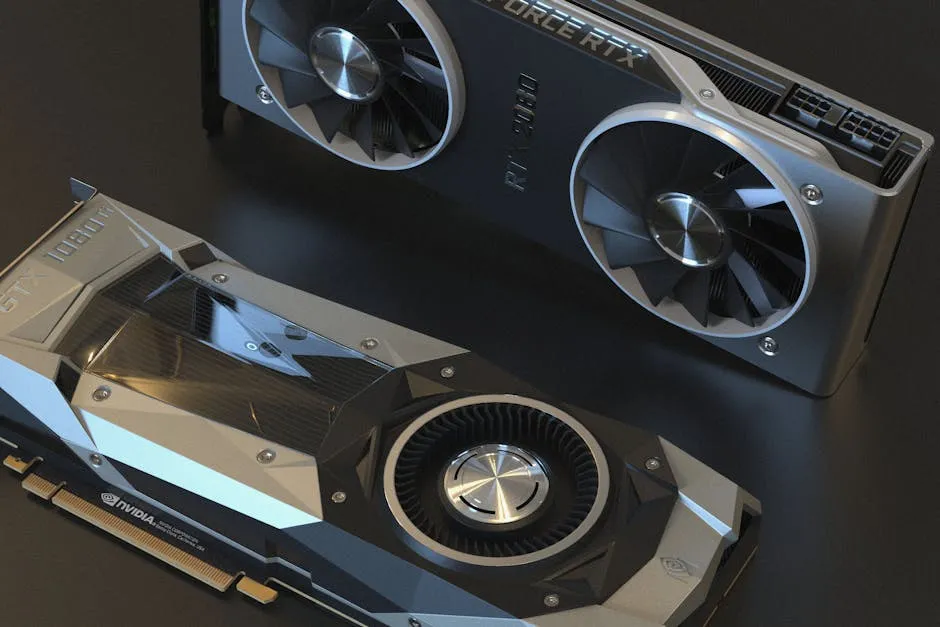
Ollama is an open-source tool that allows you to run large language models locally on your Mac, Linux, or Windows machine. It provides a simple command-line interface (CLI) and a local API server that mirrors the OpenAI API format, making it easy to swap between cloud-hosted models and locally running models with minimal code changes. Supported models include Llama 3, Mistral, Phi-3, Gemma, Qwen, and dozens more from the open-source community.
The term “Ollama Cloud” is sometimes used informally to describe scenarios where Ollama is deployed on a cloud server—such as a GPU-equipped virtual machine on AWS, Google Cloud, or a bare-metal server—rather than a local laptop. In this configuration, Ollama acts as the model runtime layer, and the cloud infrastructure provides the compute power. This is distinct from using a commercial AI API like OpenAI or Anthropic, where you pay per token and have no control over the underlying model.
How Ollama Works Under the Hood
When you run a model through Ollama, the tool handles model downloading, quantization management, and serving a local HTTP API on port 11434 by default. It uses llama.cpp as its inference backend, which is highly optimized for running quantized models on consumer hardware—including Apple Silicon chips using the Metal GPU backend. A model like Llama 3 8B can run on a MacBook Pro with 16GB of RAM at practical speeds for development and testing. Larger models like 70B parameter variants require more significant GPU resources, which is where cloud deployment becomes relevant.
Why Ollama Matters for Modern AI Workflows
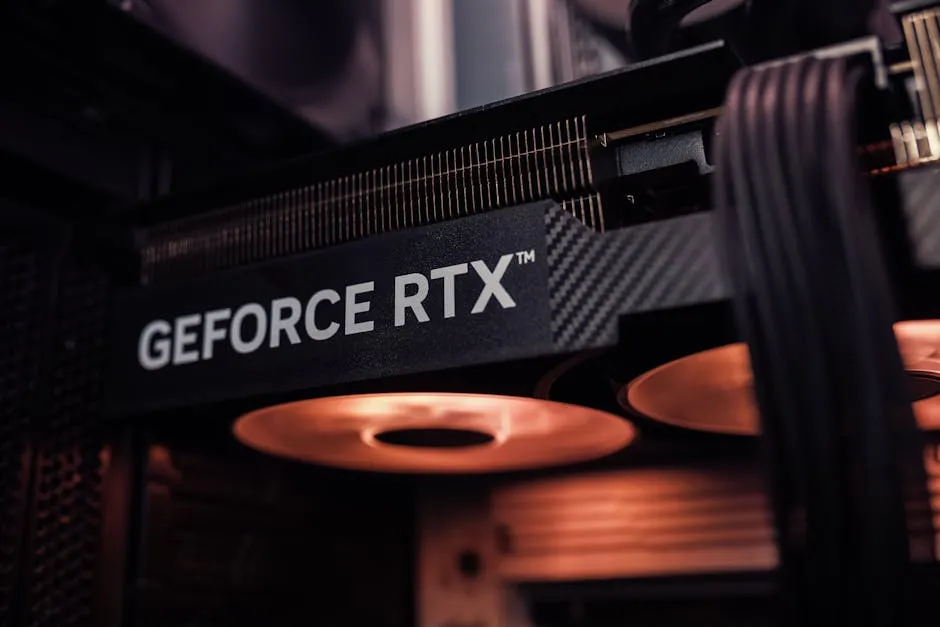
Ollama solves several real problems that cloud-only AI approaches leave unaddressed:
- Data privacy and compliance: Running models locally means sensitive data—customer information, proprietary code, confidential documents—never leaves your infrastructure. This is critical for healthcare, legal, and financial applications subject to regulatory requirements.
- Cost control at scale: Cloud API costs scale linearly with usage. A high-volume application making millions of API calls per month can face enormous OpenAI or Anthropic bills. A self-hosted Ollama setup on dedicated hardware has fixed costs regardless of volume.
- Model customization and fine-tuning: You can run custom fine-tuned models that have been trained on your proprietary data—something not possible through standard commercial APIs.
- No rate limits or downtime dependency: Cloud APIs impose rate limits and occasionally experience outages. A locally running Ollama instance is available as long as your hardware is on.
- OpenAI-compatible API: Ollama’s API is compatible with the OpenAI client libraries, meaning you can often switch existing applications to use local models with a one-line config change.
For more insights on AI tools and infrastructure options, check out the Deep Dive section on HubKub.
Step-by-Step: Getting Started with Ollama for AI Workflows
Here is how to go from zero to running a local AI model for real work:
- Install Ollama. Visit ollama.com and download the installer for your operating system. On macOS, it installs as a menu bar app with a CLI component. On Linux, a single curl-pipe-bash command handles the installation.
- Pull your first model. Run the command:
ollama pull llama3to download Meta’s Llama 3 8B model. It will download approximately 4-5 GB depending on the quantization level selected. - Run a quick test. Execute
ollama run llama3to open an interactive chat session in your terminal. Ask it a question and verify it responds correctly. - Connect it to your application. Ollama starts a local API at http://localhost:11434. You can call it using the same syntax as the OpenAI API by pointing your OpenAI client to the Ollama base URL.
- Explore the model library. Browse available models at ollama.com/library. Models are listed with their parameter counts, quantization options, and RAM requirements so you can choose one that fits your hardware.
- Set up for cloud deployment. If you need more power than your local hardware provides, provision a GPU instance on AWS or GCP, install Ollama on it, expose the API port securely (with authentication), and point your applications to it. This is the “Ollama Cloud” pattern.
- Integrate with orchestration tools. Ollama works natively with LangChain, LlamaIndex, Open WebUI, and other popular AI application frameworks, making it straightforward to build production-grade RAG systems and AI agents on top of it.
Common Questions — What Is Ollama and Is It Good for AI Workflows?
Is Ollama free to use?
Yes—Ollama itself is completely free and open source. The models it runs are also freely available for download. The only costs involved are the hardware you run it on (your own machine or a cloud server you pay for) and your electricity. There are no per-token fees, no subscription tiers, and no usage limits imposed by Ollama itself.
How does Ollama compare to using OpenAI’s API directly?
OpenAI’s API gives you access to frontier models like GPT-4o that are significantly more capable than most currently available open-source models. Ollama gives you privacy, cost control, and customization. For tasks where GPT-4o’s capability edge is critical—complex reasoning, newer coding assistance—the API wins. For privacy-sensitive or high-volume tasks where good-enough quality suffices, Ollama’s local models can be a better fit.
What hardware do I need to run Ollama effectively?
For practical development use, a machine with 16GB of RAM and a modern CPU or GPU can run 7B-8B parameter models comfortably. Apple Silicon Macs are particularly well-suited due to their unified memory architecture. For 13B models, 32GB RAM is recommended. For 70B models, a dedicated GPU with 40GB+ VRAM is needed, which typically means a cloud GPU instance rather than consumer hardware.
Can I use Ollama for production applications?
Yes, but with caveats. Ollama is production-ready in the sense that it is stable, actively maintained, and widely used in real applications. The limiting factors are model quality relative to commercial frontier models and the infrastructure requirements for handling high concurrent request volumes. Many teams use Ollama for internal tools, low-latency applications, and privacy-critical workflows while using commercial APIs for customer-facing features that demand the highest quality output.
Conclusion: Is Ollama Worth Using for Your AI Workflow?
Ollama is one of the most practical tools available for anyone who wants to move beyond pure dependence on commercial AI APIs. Three key takeaways:
- For privacy and cost control at scale, Ollama is hard to beat—especially for internal tools, data-sensitive workflows, or high-volume applications where per-token costs accumulate quickly.
- Hardware requirements are the real constraint—meaningful use of larger, more capable models requires either powerful local hardware or cloud GPU infrastructure.
- The OpenAI-compatible API makes adoption nearly frictionless for teams already building on top of OpenAI’s client libraries.
Explore our How-To guides for more practical tutorials on setting up AI infrastructure and integrating open-source models into real workflows. If you are already experimenting with local AI, Ollama is the tool most worth investing time in mastering.
See also: AI Tools and Guides: Everything You Need to Know in 2026 — browse all AI articles on Hubkub.
Related Articles
- What Is an AI Agent and How Is It Different from a Chatbot?
- What Is Prompt Engineering and Does It Still Matter in 2026?
- Best AI Tools for Writing, Research, and Content Planning in 2026
Last Updated: April 13, 2026
AI tool evaluation checklist
AI product claims can change quickly. Before relying on this tool or model in a real workflow, compare the current official documentation, pricing, data policy, and limits with your use case.
- Use case fit: define whether you need writing, coding, research, automation, image/video work, or enterprise controls.
- Data risk: avoid pasting confidential customer data, credentials, private source code, or regulated records unless your plan and policy allow it.
- Verification: fact-check important outputs against official sources or direct testing.
- Cost and limits: review message caps, context limits, file support, API pricing, and team controls before adopting it widely.
Related Hubkub resources: AI Tools Guides, Content Quality Standards, and AI Usage Policy.
FAQ
Can I rely on AI output without checking it?
No. Important AI outputs should be verified against official sources, direct testing, or expert review, especially for technical, financial, legal, or security decisions.
What data should I avoid entering into AI tools?
Avoid confidential customer data, passwords, private keys, regulated records, and private source code unless your organization explicitly permits it.