Table of Contents
Key takeaways
- This page gives a practical decision path for Tesla Cybercab 2026: Robotaxi Production Begins This Month, not just a broad overview.
- Compare the tradeoffs, requirements, and alternatives before acting on the recommendation.
- Use the related Hubkub links below to continue into the closest next topic.
After 14 years on the road, the Tesla Model S is officially finished. On January 28, 2026, CEO Elon Musk announced the end of production for both the Model S and Model X. He also revealed that freed factory space would be converted to build humanoid robots. That same month, Tesla Cybercab production at Gigafactory Texas entered full swing — with mass production officially beginning in April 2026. This is not a product refresh. It is the most dramatic strategic pivot in Tesla’s history. In this deep dive, you will learn exactly why Tesla killed its flagship cars, what the Cybercab launch looks like today, how the Optimus robot plan fits in, and what the whole transformation means for consumers and workers worldwide.
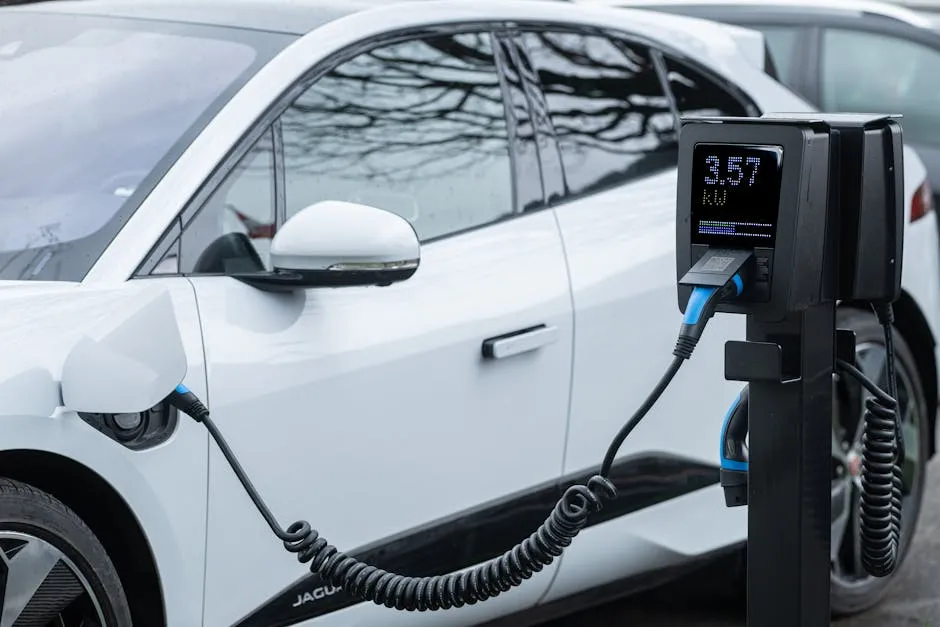
Why Tesla Ended the Model S and Model X
The sales data made the decision look inevitable. In Q4 2025, Tesla delivered just 12,881 Model S and Model X units combined — compared to 323,800 Model 3 and Model Y deliveries in the same quarter. The luxury lineup represented less than 4% of total volume while occupying premium factory floor space at the Fremont, California plant.
Musk framed the retirement in blunt terms on Tesla’s earnings call: “We’re really moving into a future that is based on autonomy.” Custom orders for both models closed immediately after the announcement. Only existing inventory remains available. The final cars will leave the Fremont line by end of Q2 2026.
The timing is tied directly to Tesla’s AI pivot strategy. The company posted full-year 2025 revenue of $94.8 billion — a 3% decline from 2024, the first revenue contraction in Tesla’s history as a public company. Automotive sales fell 10% year-over-year. Musk’s calculated response is to redirect manufacturing capacity toward two higher-value categories: the Cybercab autonomous vehicle and the Optimus humanoid robot. Whether the bet pays off depends entirely on execution speed.
Tesla Cybercab Production: Everything We Know Right Now
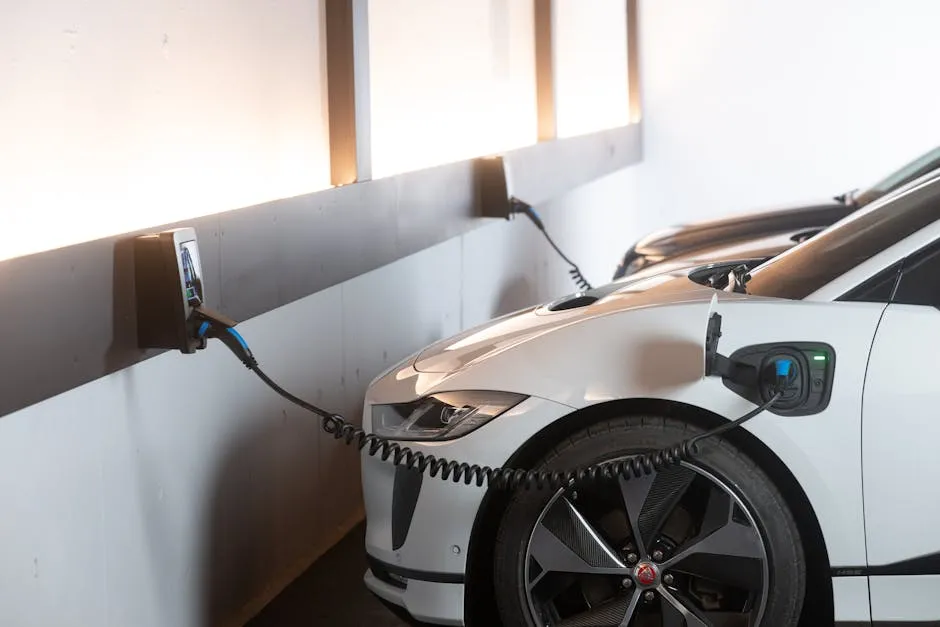
Tesla completed its first production-spec Cybercab unit at Gigafactory Texas in February 2026. Mass production officially began this month, April 2026 — marking the start of what Tesla calls the “autonomous era.” The Cybercab is a two-seat electric vehicle with no steering wheel and no pedals in its base configuration, designed to operate as a driverless robotaxi within geo-fenced city zones.
Tesla’s Austin robotaxi pilot has been running since January 2026 using 31 modified Model Y vehicles at a flat $4.20 fare per ride. Fully driverless testing — with no safety monitor on board — has already begun in that market. The Cybercab is designed to replace those vehicles as production scales.
Key facts about the Cybercab at launch:
- Two-seat design with no steering wheel or pedals (standard version)
- Mass production officially started at Gigafactory Texas, April 2026
- Production target: 2 million units per year at full capacity
- Current service: Austin, Texas at a $4.20 flat fare
- Planned expansion cities: Miami, Dallas, Phoenix, and Las Vegas
- Long-term goal: 30 active robotaxi cities by end of 2026
- Q2 2026: Steering-wheel variant launching for regulatory compliance
For a broader view of how autonomous vehicles are reshaping the tech industry, explore our deep dive technology analysis section.
Inside Tesla’s Optimus Factory Plan and What It Means for You
While the Cybercab draws attention, the Optimus humanoid robot may be the larger long-term wager. Tesla unveiled Optimus Gen 3 in Q1 2026 — described as the “first design intended for mass production,” featuring a redesigned hand and improved motion control. Previous Optimus versions were research prototypes. Gen 3 is built to be manufactured at scale.
Tesla’s capacity plan is staggering. That Fremont floor currently produces roughly 100,000 Model S/X units per year. Tesla plans to reconfigure it for 1 million Optimus robots annually — a 10x improvement in unit throughput from the same physical space. At Gigafactory Texas, Tesla has broken ground on a dedicated robot facility targeting 10 million units per year by 2027. The next-generation Optimus Gen 4 will be built there. To fund all of this, Tesla committed to over $20 billion in capital expenditure during 2026 — double the prior year’s investment.
According to Electrek’s coverage of the earnings call, Musk’s argument is plain: building slow-selling luxury cars is incompatible with the pace Tesla needs to capture the autonomous vehicle and robotics markets. At a target retail price of $20,000–$30,000 per unit, even 500,000 Optimus units per year would generate $10–15 billion in new revenue.
Who Wins and Who Faces Risk in Tesla’s AI Era
The practical impact on people breaks down clearly. Consider these four groups:
- Ride-hail consumers: A $4.20 flat fare in Austin already undercuts Uber in many trips. If Tesla’s robotaxi fleet scales, autonomous ride pricing could drop across expansion cities — and eventually across Asia’s ride-heavy markets too.
- Professional drivers: Taxi and ride-hail drivers in Cybercab launch cities face direct near-term disruption as driverless fleets grow.
- Factory and logistics workers: Optimus Gen 3 targets repetitive manufacturing tasks — including within Tesla’s own factories — before broader industrial deployment.
- Tech and AI professionals: Tesla’s expansion creates strong demand for FSD engineers, robotics programmers, and simulation data specialists globally.
Wedbush Securities analyst Dan Ives calls Tesla “the most undervalued AI play in the market,” projecting a $2 trillion valuation by year-end from a current ~$1.35 trillion. JPMorgan is more cautious, pointing to a 300x price-to-earnings ratio and declining auto revenues. Prediction markets assign only 13% probability to a California robotaxi launch by June 30, 2026 — execution risk is real even if the strategy is clear.
Common Questions — — Tesla Cybercab Production
Q: When did Tesla Cybercab mass production officially start?
A: Tesla completed its first production Cybercab at Gigafactory Texas in February 2026, with mass production officially beginning in April 2026. The company’s long-term target is 2 million Cybercab units per year across multiple factories at full capacity.
Q: Why did Tesla stop making the Model S and Model X?
A: Sales had dropped to just 12,881 units combined in Q4 2025 — less than 4% of Tesla’s total deliveries. Elon Musk announced the end of production on January 28, 2026, redirecting the Fremont factory floor to produce Optimus humanoid robots instead. Final units leave the line by Q2 2026.
Q: How much will the Tesla Optimus robot cost?
A: Elon Musk has stated a target price of $20,000 to $30,000 per unit at full production scale. The Optimus Gen 3, unveiled in Q1 2026, is the first version designed specifically for mass manufacturing, with Tesla targeting 1 million units per year from the Fremont facility.
Q: Is Tesla’s robotaxi service available to the public now?
A: Tesla’s robotaxi service currently operates in Austin, Texas using 31 supervised Model Y vehicles at a $4.20 flat fare. Fully driverless testing has already begun in Austin. Expansion to Miami, Dallas, Phoenix, and Las Vegas is planned as the Cybercab fleet scales through 2026.
Conclusion
Three things define Tesla’s 2026 moment: Cybercab mass production has begun this month at Gigafactory Texas, the Model S and X are permanently retired as their factory lines are retooled for 1 million robots per year, and a $20 billion capital commitment is funding the full transformation. The execution risks are real — analysts are divided sharply, and regulatory approvals lag ambition. But the strategic direction is unmistakable. For the latest on how AI is reshaping industries beyond mobility, follow our AI news and analysis. The autonomous future is being manufactured right now — explore more in our Deep Dive section.
Last Updated: April 13, 2026
Reader decision checklist
Use this checklist to turn the article into a practical next step instead of a passive read.
- Confirm the main claim: compare the article with official documentation, release notes, or your own dashboard when the topic affects production work.
- Assess your use case: decide whether this matters for personal use, a small team, or an administrator workflow.
- Check risk: identify whether account access, data privacy, security, cost, or compatibility is involved.
- Take the smallest safe step: test in a low-risk environment before changing a main device, account, or production setup.
Related Hubkub resources: Content Quality Standards, Editorial Policy, and Corrections Policy.
FAQ
How should I use this guide?
Use it as a practical starting point, then verify details against your own device, account, software version, or official documentation.
What if the information becomes outdated?
Technology changes quickly. If you notice outdated steps or broken links, use Hubkub’s contact or corrections policy pages so the article can be reviewed.