Key takeaways
- This page gives a practical decision path for Humanoid Robots 2026: How Atlas Is Changing Manufacturing, not just a broad overview.
- Compare the tradeoffs, requirements, and alternatives before acting on the recommendation.
- Use the related Hubkub links below to continue into the closest next topic.
Industry analysts expect 50,000 humanoid robots to ship globally in 2026 — a figure that would have seemed science fiction five years ago. For decades, bipedal robots were engineering demonstrations, not workers. That changed in January 2026.
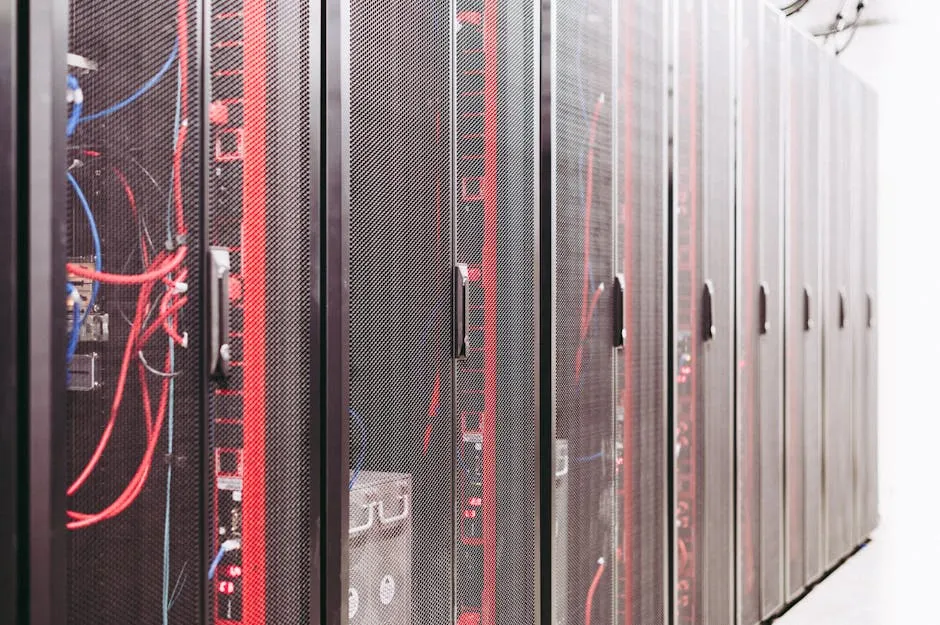
Boston Dynamics unveiled the production-ready Atlas at CES 2026. Figure AI’s robots are running full warehouse shifts at BMW. Tesla has over 1,000 Optimus units on its own factory floors. The race to deploy humanoid robots at scale has moved from research labs to real production lines.
In this deep dive, you will learn which humanoid robots are working in 2026, what separates them technically and commercially, and what this shift means for Southeast Asia’s manufacturing economies.
Boston Dynamics Atlas: From Lab Robot to Factory Worker
After more than a decade of viral stunts, Boston Dynamics’ Atlas robot has a new job: industrial worker. At CES 2026, the company unveiled the production version of its all-electric Atlas. The entire 2026 production run was committed to launch partners before the announcement aired.
The specifications are formidable. Atlas stands 1.9 meters tall, weighs 90 kg, and can lift up to 50 kg (110 lbs). Its 56 degrees of freedom and 2.3-meter arm reach make it capable of complex manipulation in dynamic environments. Three-fingered grippers with tactile sensors detect pressure and texture, letting the robot handle fragile components without damage. A four-hour battery with hot-swap capability enables continuous shift rotations.
First deployments head to Hyundai’s Robotics Metaplant Application Center (RMAC) in Bryan County, Georgia. Hyundai has committed $26 billion to U.S. operations, including a new robotics factory targeting 30,000 Atlas units per year.
The Google DeepMind Integration
Atlas’s hardware is matched by an increasingly capable mind. In early 2026, Boston Dynamics formalized a partnership with Google DeepMind to integrate Gemini Robotics — Google’s foundation model for physical AI — directly into Atlas and the Spot quadruped platform.
Rather than executing pre-programmed sequences, Atlas can now interpret natural language instructions and adapt to objects it has not encountered before. That cognitive flexibility is the gap that has limited factory automation for generations. General-purpose robots that reason, not just repeat, are a fundamentally different category of machine.
The Humanoid Robot Race: Figure AI, Tesla Optimus, and the $5,900 Challenger

Boston Dynamics built the most technically advanced product. But it is not alone.
Figure AI’s Figure 03 launched in late 2025, designed for high-volume manufacturing with improved dexterity and cycle speed. Earlier models — Figure 01 and 02 — are already running real shifts at BMW’s Spartanburg, South Carolina plant, handling parts sorting and warehouse logistics.
Tesla’s Optimus Gen 3 targets the mass market. The company has over 1,000 Optimus units deployed internally across its global manufacturing facilities. Its target external price of $20,000–$30,000 per unit sits far below enterprise competitors.
The competitive wildcard is China. Unitree launched a humanoid robot priced at just $5,900 — less than a mid-range car. China’s factory robot exports grew 58% year-on-year in H1 2025, with Vietnam, Mexico, and Thailand as the three largest destination markets. The price floor on humanoid automation has dropped dramatically. Stay current with robotics and technology breakthroughs through our Deep Dive coverage on Hubkub.
What Humanoid Robots Mean for Southeast Asia’s Manufacturing Sector
Southeast Asia stands at the center of this industrial transition. The region’s robot market was valued at USD 1.29 billion in 2026, projected to reach USD 1.83 billion by 2031 — a 7.24% compound annual growth rate driven by rising wages, supply chain relocation, and government automation incentives.
In 2025 alone, Singapore’s Productivity Solutions Grant, Malaysia’s Smart Manufacturing 4.0 Intervention Fund, and Thailand’s eight-year tax holidays collectively backed more than 3,000 new robot deployments. Vietnam’s national action plan targets 10,000 automated manufacturing cells by 2030. Chinese humanoid robots — including Unitree’s sub-$6,000 model — are already flowing into Vietnamese and Thai factories via direct export channels.
Southeast Asia’s manufacturing workforce faces real exposure. According to the McKinsey Global Institute’s Future of Work research, automation could force up to 375 million workers to change occupations by 2030 — roughly 14% of the global workforce. Southeast Asia’s export-manufacturing economies rank among the most directly exposed regions.
Here is what regional manufacturers and workers should monitor:
- Upskilling pipelines: Countries funding technical education now will produce the operators and maintenance engineers that humanoid robots require.
- Chinese pricing pressure: Unitree’s $5,900 model brings humanoid automation within reach of medium and small factories across Vietnam and Thailand.
- AI capability curves: The Gemini Robotics integration shows cognitive AI is catching up to physical dexterity faster than most forecasts predicted.
- Policy windows: Singapore, Thailand, and Vietnam all offer time-limited automation incentive programs. Factories engaging now secure better terms.
Common Questions — Humanoid Robots 2026
Q: Are humanoid robots actually working in factories right now?
A: Yes. As of 2026, Figure AI’s robots are running full shifts at BMW’s Spartanburg, South Carolina facility. Tesla has over 1,000 Optimus units deployed internally across its global manufacturing plants. Boston Dynamics’ Atlas is in production and shipping to Hyundai’s Georgia metaplant. This is active commercial deployment, not a pilot program.
Q: How much does a humanoid robot cost in 2026?
A: Prices span a wide range. Tesla Optimus targets $20,000–$30,000 per unit for external buyers. Boston Dynamics’ Atlas carries enterprise pricing, likely in the six-figure range for complete deployments. China’s Unitree launched a basic humanoid at $5,900 — the lowest commercial entry point yet and a major development for smaller manufacturers weighing automation investments.
Q: Will humanoid robots replace factory workers in Southeast Asia?
A: The displacement risk is significant. McKinsey estimates automation could force 375 million workers worldwide to change occupations by 2030. Southeast Asia’s export manufacturing workforce faces direct exposure. However, humanoid robots require skilled technicians to deploy, maintain, and supervise — creating new technical roles even as repetitive assembly jobs contract.
Q: What makes Boston Dynamics Atlas different from other humanoid robots?
A: Atlas leads on physical performance — 56 degrees of freedom, 110-lb lifting capacity, and tactile-sensor grippers for fine manipulation. Its Google DeepMind Gemini Robotics integration provides genuine cognitive adaptability, allowing it to handle new tasks via natural language instruction. The main limitation: all 2026 production is committed to launch partners, and Atlas carries the highest price point in the field.
Conclusion
Three facts define the 2026 humanoid robot moment. First, capable hardware is real — Boston Dynamics Atlas lifts 110 lbs, runs on Google DeepMind’s cognitive AI, and is already shipping to factories. Second, the price barrier is falling fast, from six-figure enterprise deployments down to a $5,900 Unitree model. Third, Southeast Asia’s manufacturing corridor is both the largest opportunity market and the most exposed workforce in this global shift.
For workers, companies, and policymakers across the region, the preparation window is open now. The robots are not on their way — they are already on the floor. Explore the latest in AI and automation in our dedicated section on Hubkub.
Last Updated: April 13, 2026
Reader decision checklist
Use this checklist to turn the article into a practical next step instead of a passive read.
- Confirm the main claim: compare the article with official documentation, release notes, or your own dashboard when the topic affects production work.
- Assess your use case: decide whether this matters for personal use, a small team, or an administrator workflow.
- Check risk: identify whether account access, data privacy, security, cost, or compatibility is involved.
- Take the smallest safe step: test in a low-risk environment before changing a main device, account, or production setup.
Related Hubkub resources: Content Quality Standards, Editorial Policy, and Corrections Policy.
FAQ
How should I use this guide?
Use it as a practical starting point, then verify details against your own device, account, software version, or official documentation.
What if the information becomes outdated?
Technology changes quickly. If you notice outdated steps or broken links, use Hubkub’s contact or corrections policy pages so the article can be reviewed.