Table of Contents
- The Forces Reshaping Digital Work Right Now
- AI Acceleration Is Restructuring Knowledge Work From the Ground Up
- Search Is No Longer Just Search
- Infrastructure Expectations Are Rising While Tolerance for Downtime Falls
- Security Pressure Is No Longer Just an IT Problem
- Frequently Asked Questions
- Conclusion: Adapt With Intention, Not Anxiety
- FAQ
- Reader decision checklist
Key takeaways
- This article summarizes the practical impact of The Biggest Tech Trends That Will Shape Digital Work in 2026 for readers tracking AI and technology changes.
- Focus on confirmed details first, then treat predictions or market impact as analysis rather than settled fact.
- Use the related Hubkub guides below when you need setup steps, comparisons, or a deeper explainer.
The Forces Reshaping Digital Work Right Now
Digital work has been changing for years, but the pace of that change accelerated sharply starting in 2023 and shows no sign of slowing. By 2026, several trends that were speculative just a few years ago have become operational realities that workers, teams, and organizations are navigating every day. This is not about hype cycles or theoretical futures — it is about concrete shifts in how software is built, how information is found, how security is managed, and how automation is woven into the structure of professional life.
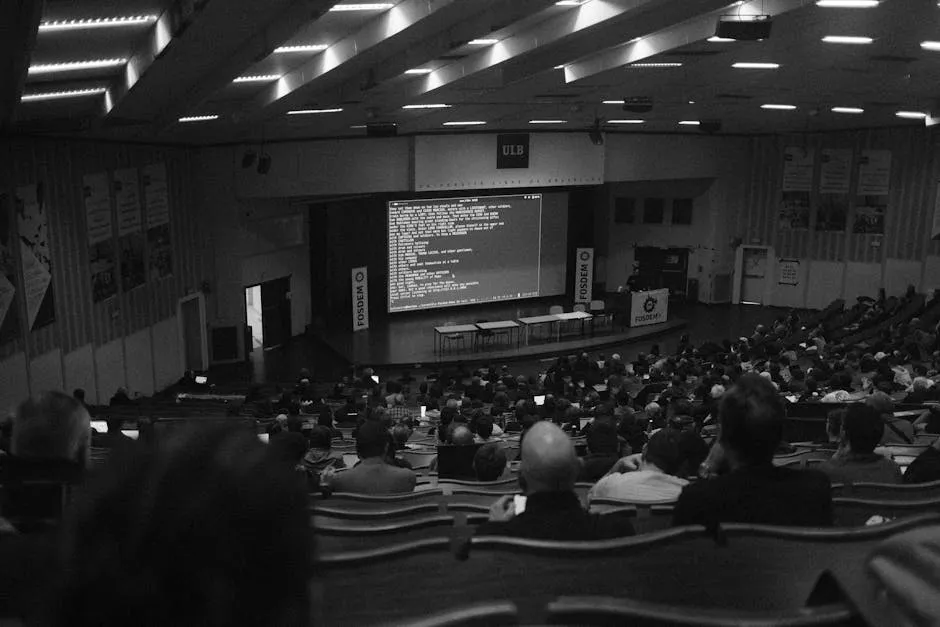
Understanding these trends is not optional for anyone who works with digital tools professionally. The organizations and individuals who grasp what is happening — and adapt their skills and systems accordingly — will find themselves significantly better positioned than those who treat each new development as an isolated curiosity rather than part of a larger pattern.
AI Acceleration Is Restructuring Knowledge Work From the Ground Up

The most consequential trend reshaping digital work in 2026 is the broad integration of AI into the tools that knowledge workers use every day. This goes well beyond chatbots and writing assistants. AI capabilities are now embedded in project management platforms, communication tools, research environments, coding interfaces, and data analysis systems. The result is a fundamental change in what a skilled individual can accomplish and how long it takes them to do it.
For many roles, the most valuable skill is no longer the ability to execute familiar tasks quickly — it is the ability to direct, evaluate, and refine AI-generated outputs effectively. This requires a different kind of expertise: understanding what a tool can and cannot do reliably, knowing how to frame requests to get useful results, and maintaining the critical judgment to catch errors that automated systems produce with confidence. Workers who develop this meta-skill are finding themselves significantly more productive than peers who either avoid AI tools entirely or use them uncritically.
The acceleration is also compressing timelines for skill obsolescence. Tasks that took junior professionals months to learn and years to master are now achievable by beginners with AI assistance in a fraction of that time. This creates real economic pressure on entry-level and mid-level roles that are defined primarily by execution rather than judgment. Following ongoing AI developments is now a professional responsibility, not just a personal interest.
Search Is No Longer Just Search
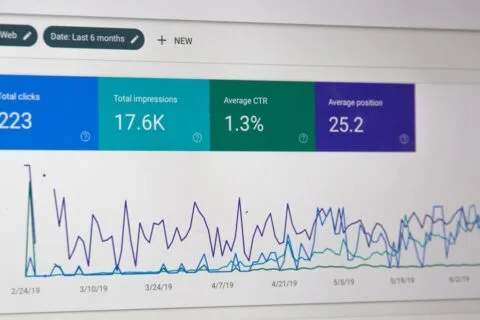
The way people find information online is undergoing its most significant structural change since the rise of search engines themselves. AI-generated summaries, conversational search interfaces, and integrated answer engines are displacing the traditional ten blue links model for a growing proportion of queries. This has immediate implications for anyone who publishes content, builds products for discoverability, or depends on organic search traffic as part of a business model.
For content creators and digital marketers, the shift demands a recalibration of what good content actually means. Content optimized purely for keyword density and link signals is increasingly less effective. What performs well in AI-mediated search environments tends to be content that demonstrates genuine expertise, answers questions clearly and completely, and is structured in ways that make it easy for automated systems to parse and reference. According to research from Search Engine Land, AI overviews are now appearing in a substantial portion of informational search queries, fundamentally changing click-through patterns.
For teams that rely on digital research — market analysis, competitive intelligence, academic work — the new search landscape offers genuine productivity gains when used well. AI-assisted research can compress exploratory phases that previously took days into hours. But it also introduces new risks around citation accuracy, source currency, and the potential for AI-generated content to contaminate research pools, creating circular reference problems that require careful methodological attention.
Infrastructure Expectations Are Rising While Tolerance for Downtime Falls
As digital work becomes more deeply embedded in organizational operations, the tolerance for infrastructure failure has dropped sharply. Downtime that was once an inconvenience is now a genuine productivity crisis — and in some industries, a compliance and revenue event. This is driving substantial changes in how organizations evaluate, procure, and manage the digital infrastructure their work depends on.
Cloud infrastructure expectations have shifted from “reliably available most of the time” to “effectively continuous with measurable SLA commitments.” Teams are asking harder questions about vendor lock-in, geographic redundancy, data sovereignty, and what happens to their operations if a core platform experiences an outage. The consolidation of critical workflows around a small number of dominant platforms creates concentration risk that thoughtful organizations are beginning to address.
At the same time, the infrastructure layer itself is becoming more intelligent. Observability tools that once required specialized DevOps expertise are now accessible to generalist technical users, enabling smaller teams to maintain higher operational standards than were previously achievable. This democratization of infrastructure capability is one of the quieter but more significant trends shaping the competitive dynamics of digital work in 2026.
- AI-assisted monitoring tools can now detect anomalies and predict failures before they cause visible downtime.
- Edge computing is reducing latency for distributed teams by processing data closer to where it is generated.
- Multi-cloud strategies are becoming standard practice for organizations that cannot afford single-vendor exposure.
- Infrastructure-as-code approaches are enabling faster, more consistent deployment across environments of all sizes.
- Security patching cycles are compressing as automated vulnerability detection shortens the window between discovery and response.
Security Pressure Is No Longer Just an IT Problem
Cybersecurity has moved from a specialized function to a shared organizational responsibility, and the pace of that shift is accelerating in 2026. This is partly driven by the increasing sophistication of attacks, partly by regulatory pressure, and partly by the recognition that most successful breaches exploit human behavior rather than purely technical vulnerabilities. Phishing attacks, social engineering, credential theft, and accidental data exposure through misconfigured tools remain the dominant vectors — and all of them involve people, not just systems.
For digital workers specifically, the security landscape has become more complex as the tool stack has expanded. Every new AI tool, collaboration platform, and data integration point represents a potential exposure. The practice of casually connecting new applications to core systems — once a sign of agility — is increasingly recognized as a governance and security risk that needs structured evaluation before implementation.
Organizations that are navigating this well tend to have clear policies around tool adoption, data classification, and access controls — and they communicate these policies in ways that workers can actually understand and follow. Keeping up with tech news around security developments is part of staying ahead of threats that evolve faster than annual training cycles can address.
Automation Is Creating New Roles, Not Just Eliminating Old Ones
One of the most misunderstood aspects of automation trends in 2026 is the assumption that automation primarily destroys work. The fuller picture is more nuanced. While automation is unquestionably displacing certain categories of repetitive, rule-based tasks, it is simultaneously creating demand for people who can design, implement, oversee, and improve automated systems. The challenge is that the new roles tend to require different skills than the roles being displaced — and the transition between them is not automatic or frictionless for most workers.
Frequently Asked Questions
Q: Which digital work skills will be most valuable in 2026 and beyond?
A: Critical evaluation of AI outputs, prompt engineering, data literacy, and the ability to design and oversee automated workflows are increasingly valued. Alongside these, judgment-intensive skills that require contextual understanding — strategic communication, complex problem framing, relationship management — remain difficult to automate and correspondingly valuable.
Q: How is the shift away from traditional search affecting content strategy?
A: Content that answers specific questions clearly, demonstrates verifiable expertise, and is structured for easy parsing by automated systems is performing better in AI-mediated search environments. Thin content optimized primarily for keyword signals is losing effectiveness, while genuinely useful, well-organized content is becoming relatively more valuable.
Q: Should small businesses worry about infrastructure reliability trends or is this mainly an enterprise concern?
A: Small businesses are often more exposed to infrastructure failures than large enterprises, not less, because they typically lack redundancy and recovery resources. Cloud-based tools with strong SLAs have significantly lowered the cost of professional-grade infrastructure, but small teams still need to think deliberately about what happens when critical tools fail.
Q: How can non-technical workers stay relevant as automation increases?
A: The most effective approach is to develop a working understanding of what automation can and cannot do well in your specific domain, position yourself as someone who can direct and evaluate automated work rather than someone who competes with it directly, and invest in the judgment and communication skills that remain genuinely difficult to automate.
Conclusion: Adapt With Intention, Not Anxiety
The trends reshaping digital work in 2026 are significant, but they are navigable. The professionals and organizations doing best are not those with the most resources or the earliest access to new tools — they are the ones who approach change deliberately, maintain clear principles about what they are optimizing for, and build the habit of continuous learning into their professional practice rather than treating it as a periodic event. If you want to go deeper on any of these trends, explore our in-depth analysis articles for detailed coverage of the developments shaping digital work right now.
See also: Tech News and Analysis: Key Technology Trends in 2026 — browse all Tech News articles on Hubkub.
Related Articles
- Edge Computing Explained: Why It Matters for the Future of the Internet
- AR Glasses in 2026: What Is Actually Available and What Works
- Mastodon in 2026: The State of Federated Social Media
FAQ
Q: What should readers know first about The Biggest Tech Trends That Will Shape Digital Work in 2026?
A: The Biggest Tech Trends That Will Shape Digital Work in 2026 should be evaluated by its real use case, platform fit, current official source information, and the tradeoffs explained in this guide.
Q: Who is The Biggest Tech Trends That Will Shape Digital Work in 2026 best for?
A: The Biggest Tech Trends That Will Shape Digital Work in 2026 is best for readers whose needs match the workflow, category, and constraints described in the article, rather than readers looking for a generic one-size-fits-all choice.
Q: What should I check before acting on this guide?
A: Check the official source links, current release notes, pricing or license details, and any account or platform requirements before making a final decision.
Q: Where should I go next after reading this?
A: Use the related-reading links on Hubkub to compare alternatives, setup steps, and adjacent tools before changing your software stack or workflow.
Last Updated: April 13, 2026
Reader decision checklist
Use this checklist to turn the article into a practical next step instead of a passive read.
- Confirm the main claim: compare the article with official documentation, release notes, or your own dashboard when the topic affects production work.
- Assess your use case: decide whether this matters for personal use, a small team, or an administrator workflow.
- Check risk: identify whether account access, data privacy, security, cost, or compatibility is involved.
- Take the smallest safe step: test in a low-risk environment before changing a main device, account, or production setup.
Related Hubkub resources: Content Quality Standards, Editorial Policy, and Corrections Policy.