Table of Contents
Key takeaways
- This article summarizes the practical impact of OpenAI Spud Model: Is This GPT-6 and When Will It Launch? for readers tracking AI and technology changes.
- Focus on confirmed details first, then treat predictions or market impact as analysis rather than settled fact.
- Use the related Hubkub guides below when you need setup steps, comparisons, or a deeper explainer.
What if OpenAI’s next major AI model finished training while most people were still waiting for GPT-5? Around March 24, 2026, CEO Sam Altman told OpenAI employees that the company’s next flagship model — internally codenamed “Spud” — has completed pre-training. Altman described it as a “very strong model” that can “really accelerate the economy.” That is not language he uses for minor updates.
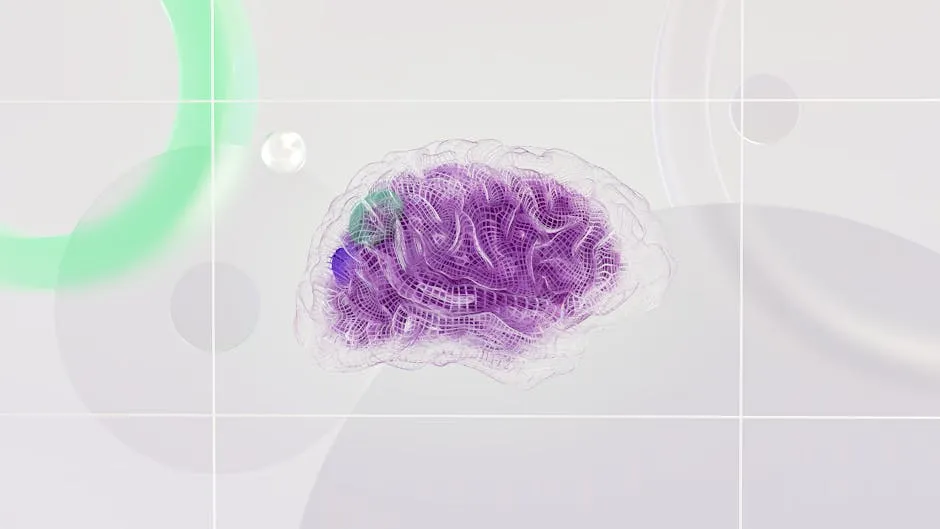
The OpenAI Spud model is widely believed to be the foundation for GPT-6, though OpenAI has not officially confirmed that name. It was trained at the Stargate facility in Abilene, Texas, using over 100,000 NVIDIA H100 GPUs — the largest AI training cluster OpenAI has ever operated. A public release is expected within weeks.
In this article, you will learn exactly what Spud is, how it was built, what major changes it triggered inside OpenAI, and what it is likely to mean for ChatGPT users in the coming months.
What Is OpenAI’s Spud Model?
“Spud” is an internal codename — a placeholder name similar to how Google used dessert names for Android releases. The actual public product name, whether GPT-5.5 or GPT-6, has not been confirmed by OpenAI. The codename first emerged publicly through a report by The Information, following an all-hands meeting where Altman announced the completion of pre-training.
What makes Spud different from previous OpenAI updates? Internal sources have hinted that the model includes a capability that is “very different from what we’ve seen before.” No specific technical details — parameter count, architecture, or confirmed multimodal specifications — have been disclosed publicly. But Altman’s framing was unusually expansive. Saying a new model can “accelerate the economy” places it in a category apart from routine model refreshes. That is the language OpenAI uses when it believes it has crossed a meaningful threshold.
Spud also arrives in the context of heightened competition. OpenAI has reportedly been in what internal sources call a “Code Red” state since at least December 2025, after Anthropic’s Claude and Google’s Gemini made significant competitive gains. Spud is the direct technical response. The competitive pressure helps explain why OpenAI made the dramatic decision to shut down Sora and redirect all of that GPU compute toward training this model.
Spud and the Planned ChatGPT Super App
Spud is expected to power OpenAI’s upcoming “super app” — a unified platform combining ChatGPT, Codex (coding agent), Atlas (web browsing agent), and other tools in a single interface. Today, users must switch between separate products to accomplish different tasks. The super app would allow users to move between conversational AI, code generation, and agentic web research in one session. This makes Spud less of a research model and more of a core commercial product powering OpenAI’s entire consumer and enterprise stack.
The Stargate Infrastructure Behind Spud’s GPT-6 Release Date
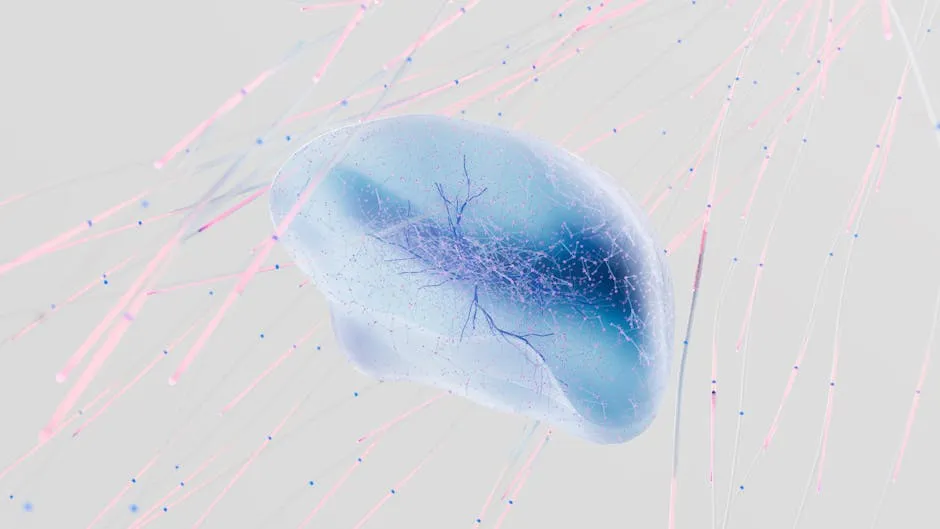
Spud was trained at the first Stargate facility in Abilene, Texas, using more than 100,000 NVIDIA H100 GPUs. On March 12, 2026, Altman stated publicly: “We are training right now on the first site in Abilene what I think will be the best model in the world, hopefully by a lot.” According to AI tracker lifearchitect.ai, pre-training concluded approximately March 24, 2026.
The Stargate project — a joint venture between OpenAI, SoftBank, and Oracle — has planned capacity of up to 10 gigawatts across multiple U.S. sites. This infrastructure was purpose-built to train frontier models at a scale no single cloud provider could previously match. The compute behind Spud is the direct result of this multi-year, multi-billion-dollar infrastructure commitment. For an article on the broader AI competition driving these investments, see the latest tech news from Hubkub.
Here is a summary of everything publicly known about Spud’s training environment and expected launch:
- Training facility: Stargate Site 1, Abilene, Texas
- GPU cluster: Over 100,000 NVIDIA H100 GPUs
- Pre-training completed: ~March 24, 2026
- Stargate total planned capacity: Up to 10 gigawatts (multi-site)
- Expected public launch: “Within a few weeks” (per Altman, late March 2026)
- Likely official name: GPT-5.5 or GPT-6 (unconfirmed by OpenAI)
The financial stakes reinforce how seriously OpenAI is treating this launch. SoftBank secured a $40 billion bridge loan to fund further OpenAI investment, arranged with JPMorgan, Goldman Sachs, Mizuho, SMBC, and MUFG. OpenAI also recently closed a $120 billion funding round at an $840 billion valuation — one of the largest private fundraises in tech history. That capital scale is inconsistent with an incremental update.
What Spud Means for ChatGPT Users: Sora Out, AGI Deployment In
Alongside the Spud announcement, Altman revealed significant internal restructuring at OpenAI. The AI safety team now reports to Chief Research Officer Mark Chen. The security team moves under President Greg Brockman. Most significantly, OpenAI’s product division has been renamed “AGI Deployment”, with Fidji Simo as its CEO. This is the first time OpenAI has formally embedded the term “AGI” into its org chart as an operational category — not a research goal.
That naming shift is not cosmetic. It signals that OpenAI views itself as actively in the phase of deploying AGI-level systems. Context matters here: the ARC-AGI-3 public benchmark still shows frontier models at 0.37% versus human performance of 100% on the hardest reasoning tasks. But internally, OpenAI has shifted its framing from product development to AGI deployment. Whether Spud justifies that framing will become clear when it ships.
For everyday ChatGPT users, the most visible immediate change is the discontinuation of Sora, OpenAI’s video generation model. Senior employees described being surprised by how much GPU compute Sora consumed. OpenAI’s leadership made a straightforward calculation: that compute delivers more value training Spud than generating video. The Sora team has been reassigned to world models and robotics research — both areas directly relevant to building next-generation AI agents. You can track official announcements at OpenAI’s official news page.
On the capability side, Spud is designed to excel in three areas: automating complex multi-step workflows that currently require human oversight, providing deeper engineering assistance through Codex integration, and accelerating scientific research by synthesizing large bodies of literature. For users who rely on ChatGPT for professional work, the shift to the planned super app — combining all these tools in one interface — could significantly change day-to-day workflows when Spud launches.
Common Questions — OpenAI Spud Model
Q: What is the OpenAI Spud model?
A: Spud is OpenAI’s internal codename for its next major AI model, which completed pre-training around March 24, 2026. CEO Sam Altman described it as a “very strong model” that can “really accelerate the economy.” The official public name — likely GPT-5.5 or GPT-6 — has not been confirmed by OpenAI.
Q: When will the OpenAI Spud model be released?
A: Altman told employees in late March 2026 that a public release would happen within “a few weeks.” Based on that timeline, the most likely launch window is April or May 2026. OpenAI has not announced an official release date.
Q: Is the Spud model the same as GPT-6?
A: Spud is widely speculated to be GPT-6, but OpenAI has not confirmed this. The model may launch under a different name entirely. What is confirmed: Spud was trained at greater scale than any previous OpenAI model, using the Abilene Stargate facility with over 100,000 NVIDIA H100 GPUs.
Q: Why did OpenAI shut down Sora to prioritize Spud?
A: OpenAI determined that the GPU compute required to run Sora was more valuable redirected toward training Spud and building the planned super app. The decision reflects OpenAI’s strategic focus on establishing the most capable frontier model ahead of a planned IPO. The Sora team has since been reassigned to world models and robotics research.
Conclusion
Three things stand out from the OpenAI Spud model story. First, pre-training is complete and a public launch is likely within weeks — making April or May 2026 the most probable window. Second, the infrastructure behind Spud — 100,000+ H100 GPUs, $40 billion in SoftBank financing, 10-gigawatt Stargate capacity — represents a scale of compute commitment unprecedented in OpenAI’s history. Third, the internal restructuring, from renaming the product division “AGI Deployment” to shutting down Sora, signals this is a strategic pivot rather than a routine model refresh.
Whether Spud delivers on Altman’s framing of economic acceleration remains to be seen. But the organizational and financial signals point in one direction: OpenAI is betting everything on this release. For deeper coverage of AI model developments and what they mean for users and developers, explore our AI section on Hubkub.
Last Updated: April 13, 2026
AI tool evaluation checklist
AI product claims can change quickly. Before relying on this tool or model in a real workflow, compare the current official documentation, pricing, data policy, and limits with your use case.
- Use case fit: define whether you need writing, coding, research, automation, image/video work, or enterprise controls.
- Data risk: avoid pasting confidential customer data, credentials, private source code, or regulated records unless your plan and policy allow it.
- Verification: fact-check important outputs against official sources or direct testing.
- Cost and limits: review message caps, context limits, file support, API pricing, and team controls before adopting it widely.
Related Hubkub resources: AI Tools Guides, Content Quality Standards, and AI Usage Policy.
FAQ
Can I rely on AI output without checking it?
No. Important AI outputs should be verified against official sources, direct testing, or expert review, especially for technical, financial, legal, or security decisions.
What data should I avoid entering into AI tools?
Avoid confidential customer data, passwords, private keys, regulated records, and private source code unless your organization explicitly permits it.